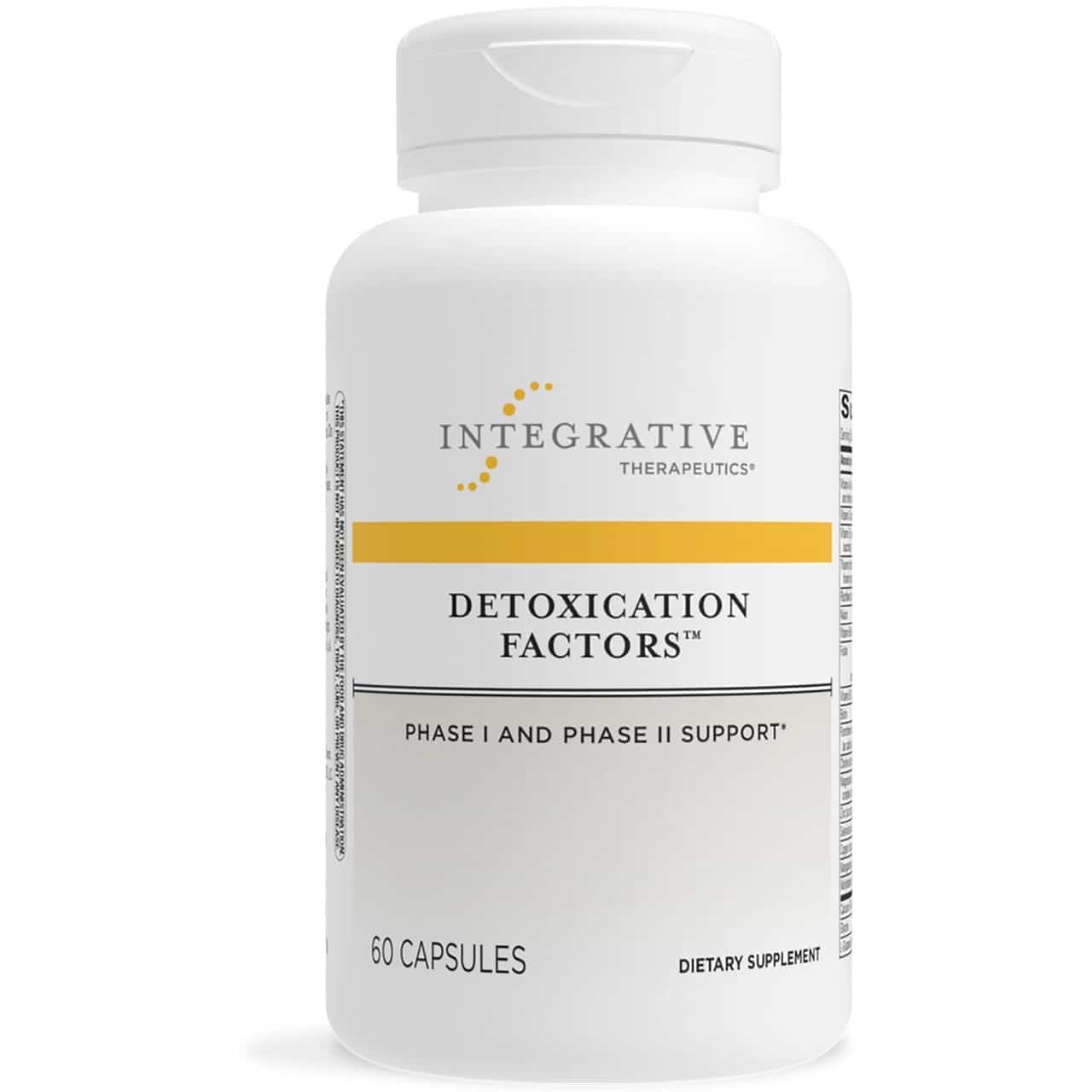
Detoxication Factors Integrative Therapeutics: Dose & Safety
Table of Contents
- What is Detoxication Factors Integrative Therapeutics?
- What's in Detoxication Factors and how do the ingredients work?
- Phase I cofactors: B vitamins in their active forms
- Glutathione building blocks: NAC, glycine and glutamic acid
- Calcium D-glucarate: keeping finished work finished
- Methylation, sulfation and amino acid conjugation
- Antioxidants that cover Phase I's byproducts
- The botanicals: milk thistle, turmeric, broccoli, green tea and grape seed
- Who may benefit from Detoxication Factors?
- How does Detoxication Factors Integrative Therapeutics compare to other detox options?
- How much Detoxication Factors should I take, and when?
- What won't Detoxication Factors do?
- Is Detoxication Factors safe to take with a multivitamin or medications?
- Is Detoxication Factors Integrative Therapeutics worth it?
- FAQs
Gus Ferreira is 57 and has stripped and refinished furniture in the same two-bay garage outside Fall River for twenty-six years. He wears a respirator now. He didn't for the first ten. Last week his sister-in-law, who runs the front desk at a chiropractic office, texted him a photo of a white bottle with one line underneath it: Detoxication Factors Integrative Therapeutics. He hasn't answered her.
He isn't against the idea. He's against the aisle. Every "detox" product he has looked at is either a tea that sends you running to the bathroom or a seven-day kit with a juice schedule taped to the lid, and almost none of them list how much of anything is inside. Before he spends thirty-six dollars, he wants to know what he'd actually be swallowing, three times a day.
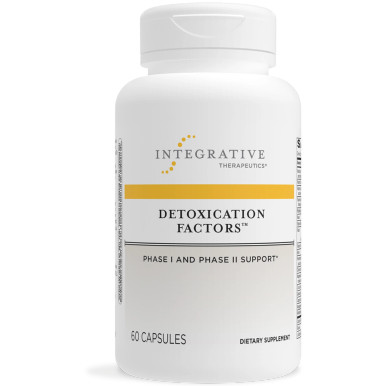
Detoxication Factors is a capsule formula from Integrative Therapeutics developed to support healthy Phase I and Phase II detoxication pathways in the liver. It is not a laxative cleanse and not a timed program. Each two-capsule serving combines more than 30 ingredients: B vitamins in active forms, antioxidant vitamins A, C and E, minerals including selenium, zinc and molybdenum, amino acids such as NAC, glycine and glutamine, calcium D-glucarate, and small amounts of milk thistle, turmeric, broccoli, green tea and grape seed extracts. The label directs adults to take 1 or 2 capsules three times daily, preferably with food, and not to exceed that dose. It fits people who want a daily nutritional base under their liver's detoxication chemistry. Anyone who is pregnant, nursing, has gallstones, a bile duct obstruction or active liver disease, or takes any medication should talk to a healthcare professional before starting it.
What is Detoxication Factors Integrative Therapeutics?
If you've searched for Detoxication Factors Integrative Therapeutics and paused at the spelling, "detoxication" is not a typo. It's an older scientific spelling of detoxification, and Integrative Therapeutics keeps it in the product name. The meaning is the same: the chemistry your liver uses to take compounds it can't use, from medications to hormones it has finished with to things you breathed in, and convert them into forms your body can move out through bile or urine.
That chemistry runs in two broad phases. Phase I, mostly handled by the cytochrome P450 family of enzymes, chemically modifies a compound, often by oxidizing it. Phase II attaches something to the modified compound (a glucuronic acid, a sulfate, glutathione, an amino acid, a methyl group) so it becomes water-soluble enough to leave. The two phases have to stay in step. Phase I tends to produce reactive intermediates, and if Phase II can't keep up, those intermediates linger.
Most "detox" products on retail shelves are built around the bowel, not the liver. They rely on fiber, senna or cascara to produce an effect you can feel by morning. Detoxication Factors takes the opposite approach: it supplies the vitamins, minerals and amino acids those enzyme systems use as cofactors and raw materials, and you should not expect to feel anything dramatic from it. That's also why it's sold through practitioners. The manufacturer describes it as usable for everyday nutritional support, for periods of increased oxidative stress, and as one piece of individualized endocrine, cardiovascular or cellular support protocols a clinician puts together.
One more thing sets it apart from a lot of the category: every ingredient has a disclosed amount. There is no proprietary blend hiding how much milk thistle is actually in there. That transparency cuts both ways, as you'll see below, but it means you can check the math yourself.
Detoxication Factors
$36.25
Detoxication Factors by Integrative Therapeutics Integrative Therapeutics' Detoxication Factors is specially formulated to promote healthy liver functioning and support the body's natural detoxification processes.… Click here to read more
What's in Detoxication Factors and how do the ingredients work?
The label on Detoxication Factors Integrative Therapeutics lists 39 ingredients, and reading them one by one tells you very little. Grouping them by the job they do in detoxication chemistry tells you a lot more. All amounts below are per two-capsule serving, from the manufacturer's current Supplement Facts panel.
Phase I cofactors: B vitamins in their active forms
Cytochrome P450 enzymes can't run without a partner enzyme, P450 reductase, which shuttles electrons to them using two riboflavin-derived cofactors (FAD and FMN) and NADPH, which your body makes from niacin. That's why the formula carries riboflavin as riboflavin-5'-phosphate (8.3 mg), niacin (10 mg) and thiamin (8.7 mg). Vitamin B6 comes as pyridoxal-5'-phosphate (10 mg), the form enzymes actually use, so the liver doesn't have to convert it first.
Folate is supplied as Quatrefolic brand 5-methyltetrahydrofolate (200 mcg DFE) and B12 as methylcobalamin (42 mcg). Both are already in the methylated forms the body uses, which matters for the methylation work described further down.
Glutathione building blocks: NAC, glycine and glutamic acid
Glutathione is the liver's most-used Phase II conjugating molecule and its main internal antioxidant. It is a tripeptide made of exactly three amino acids: glutamate, cysteine and glycine. This formula supplies all three. NAC (N-acetyl L-cysteine, 66 mg) delivers cysteine, usually the one in shortest supply. Glycine (66 mg) and L-glutamic acid (66 mg) cover the other two, with L-glutamine (66 mg) as an additional glutamate source. It also includes 16 mg of reduced glutathione itself.
Supplying the precursors has research behind it. In a study of older adults published in the American Journal of Clinical Nutrition, supplementing cysteine and glycine restored glutathione synthesis rates that had fallen with age. Be clear on scale, though: that study used gram-level doses, far above the 66 mg per serving here. In this formula they work as part of a broad cofactor base, not as a therapeutic dose of either amino acid. Riboflavin and selenium matter here too. Glutathione reductase, the enzyme that recycles used glutathione, depends on FAD, and glutathione peroxidase needs selenium (66 mcg, as L-selenomethionine).
Calcium D-glucarate: keeping finished work finished
Glucuronidation is one of the main Phase II routes. The liver tags a compound with glucuronic acid and sends it out through bile into the gut. The problem is an enzyme called beta-glucuronidase, much of it produced by gut bacteria, which can snip that tag off and let the compound be reabsorbed. Calcium D-glucarate (66 mg) is converted in the body to D-glucaro-1,4-lactone, which inhibits beta-glucuronidase. We covered this ingredient in depth in our post on Designs for Health Calcium D-Glucarate, where it's the only active.
Methylation, sulfation and amino acid conjugation
Several Phase II routes depend on specific nutrients rather than enzymes you can "boost." L-methionine (66 mg) is the precursor to SAMe, the body's universal methyl donor, and choline (66 mg), folate and B12 keep that methylation cycle turning. Methionine can also be routed toward cysteine through a B6-dependent pathway called transsulfuration, which feeds back into glutathione.
Molybdenum (50 mcg) is the least glamorous ingredient on the panel and one of the most specific. It is the required cofactor for sulfite oxidase, aldehyde oxidase and xanthine oxidase, enzymes the body uses to clear sulfites, aldehydes and purines. Taurine and glycine are also used in amino acid conjugation, the route the liver uses to process bile acids.
Antioxidants that cover Phase I's byproducts
Because Phase I reactions generate reactive oxygen species along the way, the formula pairs its cofactors with antioxidants: vitamin C (167 mg), vitamin E as d-alpha tocopheryl succinate (56 mg), vitamin A as a mix of beta carotene and retinyl palmitate (2,167 mcg RAE), quercetin (66 mg), CoQ10 (8.4 mg) and catalase (16 mcg), an enzyme that breaks hydrogen peroxide into water and oxygen. How much of an orally taken enzyme like catalase survives digestion intact is an open question, and at 16 micrograms its contribution is minor next to the vitamins.
The botanicals: milk thistle, turmeric, broccoli, green tea and grape seed
Here the disclosed amounts deserve a straight reading. Milk thistle seed extract is 16 mg per serving. Turmeric extract is 16 mg (standardized to 95% curcuminoids). Broccoli is 33 mg at 0.4% sulforaphane, which works out to roughly 0.13 mg of sulforaphane. Green tea extract is 8.3 mg and grape seed extract 3.4 mg. Sulforaphane is well known for activating Nrf2, a switch that turns on the genes for many Phase II enzymes, and the 2015 scientific review by Hodges and Minich on food-derived modulators of detoxification pathways covers it alongside several others in this formula.
These are supporting amounts, not headline doses. If milk thistle is the specific thing you want, a dedicated formula like Super Milk Thistle X from the same manufacturer is the better tool. The strength of Detoxication Factors is breadth across every pathway at once, and the botanicals are there to round that out.
Who may benefit from Detoxication Factors?
- A patient whose naturopath or functional medicine practitioner is building an individualized protocol and wants one broad cofactor base instead of eight separate bottles of B vitamins, NAC, molybdenum and glucarate.
- Someone going through a period of increased oxidative stress, as identified with their practitioner, who wants daily nutritional support aimed at the liver specifically rather than a general multivitamin.
- People who prefer methylated B vitamins (methylfolate, methylcobalamin, P5P) and would rather not piece them together.
- Anyone like Gus who is tired of proprietary blends and wants a label where every ingredient has a number beside it.
- Those avoiding wheat, dairy, artificial colors and flavors. It is not suitable for vegetarians or vegans, because the capsule is gelatin.
Who should not take this without talking to a professional first
The manufacturer's warning is specific: if you are pregnant, nursing, have gallstones, a bile duct obstruction, active liver disease, or if you are taking any medications, consult a healthcare professional before use. Gallstones and bile duct problems are on that list for a reason. Much of what Phase II produces leaves the liver through bile, so a formula aimed at these pathways is not something to self-start when bile flow is compromised. The directions are written for adults only, and the bottle should be kept out of reach of children.
How does Detoxication Factors Integrative Therapeutics compare to other detox options?
The honest comparison isn't against another branded liver formula. It's against the three things people actually reach for instead.
| Detoxication Factors | Retail cleanse kit | Standalone NAC | Quality multivitamin | |
|---|---|---|---|---|
| Target | Liver Phase I and II pathways | Mostly bowel movement | Glutathione precursor only | General nutrient coverage |
| Amounts disclosed | Every ingredient | Often a proprietary blend | Yes | Usually |
| NAC per day | 99 to 198 mg | Rarely included | Typically 600 mg or more (wins) | Rarely included |
| Molybdenum, glucarate, glycine, taurine | All four (wins) | Seldom | None | Molybdenum at most |
| Capsules per day | 3 to 6, split across meals | Varies by day of the kit | 1 to 2 | Often 1 to 2 (wins) |
| Cost | About $1.81 to $3.63 per day (60 ct) | Low, but short-term | Usually lower per day (wins) | Usually lower per day |
| Best for | Broad, daily liver-pathway support | People who want a noticeable short-term effect | A single, higher glutathione-precursor dose | Filling basic nutrient gaps |
The trade-off is plain. If glutathione is your only goal, standalone NAC delivers several times more cysteine for less money, and a product like Glutathione Cell Defense is built around that pathway. If you only need to cover general nutrient gaps, a good multivitamin is simpler and cheaper. Detoxication Factors earns its place when you want every pathway covered in one formula, including the ingredients a multivitamin skips.
If you're not sure whether this fits your situation, Holistic Health Partners offers a free product consultation. We don't want you to buy more supplements. We want you to buy the right ones.
How much Detoxication Factors should I take, and when?
The label directions for Detoxication Factors Integrative Therapeutics are: adults take 1 or 2 capsules three times daily, preferably with food, or as recommended by a healthcare professional. Do not exceed the recommended dose. That gives a daily range of 3 to 6 capsules. The serving size on the Supplement Facts panel is 2 capsules, so the full dose of 6 capsules a day is three servings.
Taking it with meals makes sense for two reasons. Vitamins A and E, CoQ10 and the curcuminoids from turmeric are fat-soluble and absorb better alongside dietary fat. And zinc and NAC are two of the ingredients most likely to cause nausea on an empty stomach. Splitting the dose across breakfast, lunch and dinner, rather than taking six capsules at once, keeps a steadier supply of the water-soluble B vitamins and amino acids, which the body clears relatively quickly.
Run the bottle math before you buy. At 3 capsules a day, a 60-count bottle lasts 20 days. At the full 6, it lasts 10. The 120-count bottle doubles both. At the time of writing, the 60-count is $36.25 on our store, which works out to about $1.81 a day at the low end and $3.63 a day at the top. Many people start at one capsule per meal and let their practitioner decide whether to move up.
Integrative Therapeutics does not state a timeframe for results, and because this formula supports enzyme systems rather than producing a felt effect, there may not be one you notice. If you're working with a practitioner, the more useful question is what markers they plan to check, and when.
What won't Detoxication Factors do?
Detoxication Factors Integrative Therapeutics won't cleanse you in the sense most detox marketing means. There is no laxative in it, no fiber load, nothing that changes your bathroom schedule overnight. People who expect that effect often decide it "isn't working." It's doing a different job.
It isn't a therapeutic dose of any single botanical. At 16 mg of milk thistle extract and about 0.13 mg of sulforaphane per serving, it will not do what a dedicated milk thistle or sulforaphane product is designed to do. It is also not a treatment for any liver condition, and anyone with active liver disease belongs in a clinician's care, not a supplement aisle.
It won't offset ongoing exposure. A capsule does not replace a respirator, ventilation or cutting back on alcohol.
And here is the part a store usually leaves out: if your only reason for considering it is a vague sense of feeling run-down, it's probably not the right first purchase. A basic blood panel with liver enzymes from your doctor costs less than a few bottles and tells you far more about whether your liver needs anything at all.
Detoxication Factors
$36.25
Detoxication Factors by Integrative Therapeutics Integrative Therapeutics' Detoxication Factors is specially formulated to promote healthy liver functioning and support the body's natural detoxification processes.… Click here to read more
Is Detoxication Factors safe to take with a multivitamin or medications?
The manufacturer's warning for Detoxication Factors Integrative Therapeutics bears repeating in full: if you are pregnant, nursing, have gallstones, a bile duct obstruction, active liver disease, or if you are taking any medications, consult a healthcare professional before use. Do not exceed the recommended dose.
The detail most reviews miss is stacking. At the full 6 capsules a day, Detoxication Factors supplies about 6,500 mcg RAE of vitamin A, roughly a third of it (about 2,000 mcg) as preformed retinyl palmitate, plus 30 mg of zinc. The NIH Office of Dietary Supplements sets the adult upper limit for preformed vitamin A at 3,000 mcg per day, and the zinc upper limit is 40 mg. On its own, the formula stays under both. Add a multivitamin that also contains retinyl palmitate and zinc, and you can pass both limits without realizing it. Preformed vitamin A is a particular concern in pregnancy, which is one reason the label's pregnancy warning matters. Add up the labels, or bring both bottles to your practitioner.
If you take a blood thinner, check in with your prescriber before starting. The formula contains vitamin E, turmeric, green tea and grape seed extracts, so it falls squarely under the label's "taking any medications" caution. The same goes for any medication cleared by the liver, since Phase I enzymes handle many drugs.
As with any supplement, consult your healthcare provider before use, especially if you are pregnant, nursing, or taking medications.
Is Detoxication Factors Integrative Therapeutics worth it?
For someone working with a practitioner who wants a single, fully disclosed formula covering Phase I cofactors, glutathione precursors, methylation nutrients, molybdenum and calcium D-glucarate, yes. It names an amount for every ingredient, which much of the category does not, and it leans on biochemistry instead of a bathroom effect. It is less of a fit if you need a high dose of one ingredient, if six capsules a day won't happen, or if you haven't yet had basic labs. The honest trade-off is breadth against depth: you get a little of nearly everything the liver's detoxication chemistry uses, not a lot of any one thing.
Gus still hasn't answered the text that said Detoxication Factors Integrative Therapeutics, but he can now read every line on the back of that bottle and knows which questions to bring to someone qualified to answer them.
Not sure if this is the right product for you?
The licensed wellness professionals at Holistic Health Partners, led by Carolyn Mulally BS, RN, HN-BC, offer free product consultations — no appointment required. They can help you find the right supplement for your specific health goals.
Get a Free Consultation
These statements have not been evaluated by the Food and Drug Administration. This product is not intended to diagnose, treat, cure, or prevent any disease.