Glutathione Cell Defense Integrative Therapeutics: Dosage
Table of Contents
- What is Glutathione Cell Defense Integrative Therapeutics?
- What is in Glutathione Cell Defense Integrative Therapeutics, and how does each ingredient work?
- Who may benefit from taking it?
- How does Glutathione Cell Defense Integrative Therapeutics compare to other glutathione options?
- How much should I take, and when?
- What will Glutathione Cell Defense Integrative Therapeutics not do?
- Safety considerations
- Is Glutathione Cell Defense Integrative Therapeutics worth it?
- FAQs
Dale Prokop has run the same auto body shop outside Waukesha for twenty-six years, and he can still hear a compressor going bad three days before it actually does. What he cannot do is read a supplement label. His wife came home from her naturopath in March with a white bottle, left it on the kitchen counter, and after the fourth time he picked the thing up he typed the whole name off the label into his phone — glutathione cell defense integrative therapeutics — and hit search.
What came back was forty minutes of strangers arguing about whether swallowing glutathione does anything at all. He put the phone down more confused than when he picked it up.
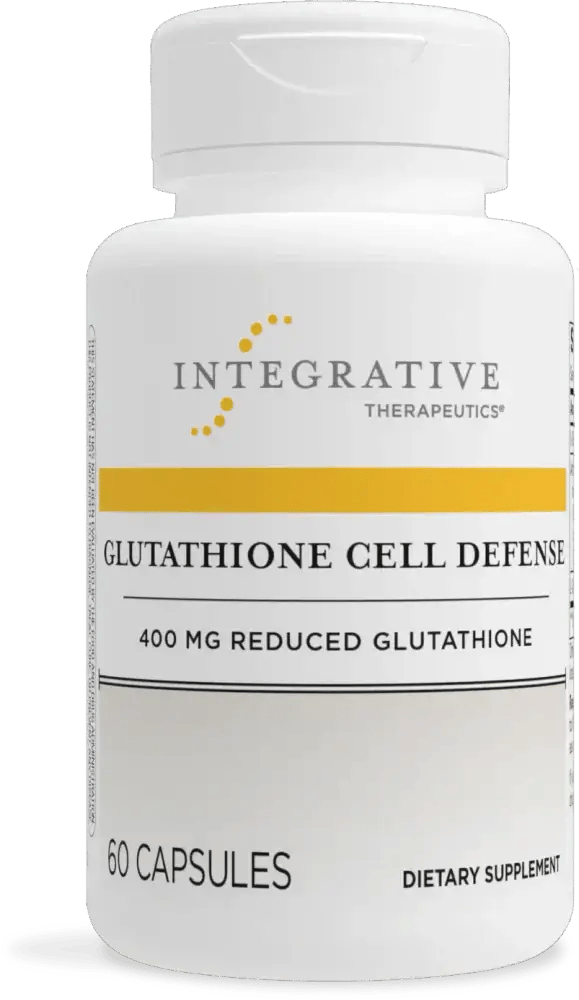
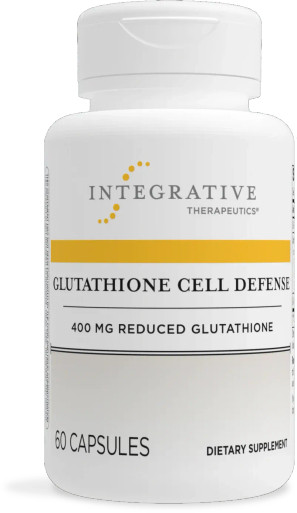
Glutathione Cell Defense Integrative Therapeutics is a capsule that combines 400 mg of Setria brand reduced L-glutathione with 200 mg of AnthoRedoxin, an anthocyanin blend of beet root, bilberry fruit extract and black elder berry extract, plus 80 mg of L-cysteine HCl. Integrative Therapeutics makes exactly one claim for it: it supports healthy cell development. The label direction is one capsule taken with 12 to 16 ounces of water, one to three times daily. The capsule is plant-derived hypromellose, and the formula contains no gluten, salt, wheat, soy, dairy, artificial colors or flavors. Sixty capsules per bottle works out to a 20- to 60-day supply, depending on how many you take.
What is Glutathione Cell Defense Integrative Therapeutics?
Glutathione is a tripeptide — three amino acids strung together — that your cells manufacture themselves and keep on hand in millimolar concentrations. It is not a vitamin. You do not have a dietary requirement for it, and nobody develops a glutathione deficiency the way they develop a B12 deficiency. What people are usually trying to do when they buy a glutathione supplement is nudge a system their body already runs.
Integrative Therapeutics built this particular product around three parts. The first is the glutathione itself, 400 mg, in the reduced form and sourced as Setria, a trademark of Kyowa Hakko Bio. The second is AnthoRedoxin, a 200 mg blend of beet root, bilberry fruit extract and black elder berry extract standardized to its anthocyanin content, which the company states is exclusive to Integrative Therapeutics. The third is 80 mg of L-cysteine HCl.
The thing worth noticing about the Glutathione Cell Defense Integrative Therapeutics label is how little it says. Integrative Therapeutics sells it under one structure-function claim, five words long. Walk down a retail supplement aisle and you will find glutathione bottles carrying six or eight claims apiece — skin, energy, immunity, detoxification, aging. A practitioner-channel product is usually the quieter one, because the company expects a clinician to be the person deciding whether it belongs in someone's regimen, and because narrower claims are easier to defend. That restraint is a reasonable proxy for how seriously a manufacturer takes its own regulatory exposure.
Glutathione Cell Defense 60c
$120.75
Glutathione Cell Defense 60c by Integrative Therapeutics Integrative Therapeutics' Glutathione Cell Defense is a unique dietary supplement that contains a patented blend of clinically-tested...… Click here to read more
What is in Glutathione Cell Defense Integrative Therapeutics, and how does each ingredient work?
Setria reduced L-glutathione, 400 mg
Glutathione cycles between two states. The reduced form, written GSH, is the one that carries a free thiol group and does the work; the oxidized form, GSSG, is what is left after that thiol has been spent. The ratio between them is one of the standard laboratory readouts for a cell's redox status. Setria is a reduced-form glutathione produced by fermentation rather than extraction, which is what allows a manufacturer to put a specific milligram number on the label and have it mean something.
For most of the last thirty years the received wisdom was that swallowing glutathione is pointless — that the peptide is cleaved in the small intestine and never arrives intact. That argument is not baseless, and you will still see it repeated confidently in comment threads. It is also no longer the whole story. A six-month randomized, double-blind trial published in the European Journal of Nutrition gave healthy adults either 250 mg or 1,000 mg of oral glutathione daily and reported increases in body stores of glutathione across blood compartments at both doses.
That study is the concrete reason a 400 mg capsule is dosed the way it is. One to three capsules puts you at 400 to 1,200 mg per day, which brackets the range the trial actually tested. It is not a number somebody picked because it looked good on a panel.
There is also a practical reason the word "reduced" shows up twice on this bottle. A free thiol group is reactive by definition, and glutathione will oxidize on exposure to air, moisture, heat and light. That is why the label tells you to keep the bottle tightly closed, store it at room temperature and keep it out of direct sunlight. Those instructions are not generic packaging copy carried over from another product. They are protecting the specific chemistry you paid for, and a bottle left open on a sunny windowsill is worth less than one kept in a cupboard.
Two honest caveats. Blood and tissue glutathione going up is a biomarker, not an outcome; the trial measured stores, not how anyone felt. And the strongest evidence here is for sustained daily intake over months, not for a bottle taken sporadically.
AnthoRedoxin blend, 200 mg
Anthocyanins are the pigments that make beets dark red, bilberries near-black and elderberries purple. They are flavonoids, and they are notoriously badly absorbed in their intact form — recovery of unchanged anthocyanins in circulation is typically a fraction of a percent of what was eaten. Most of what you swallow travels to the colon, where gut bacteria break the molecules apart into smaller phenolic acids, and those metabolites are what actually circulate at meaningful concentrations.
Almost no supplement page mentions this, and it matters, because it means the interesting question about an anthocyanin blend is not how many milligrams are in the capsule. It is what your microbiome does with them, which varies substantially between people.
One limitation to be straight about: the 200 mg is the weight of the whole blend, not of the anthocyanins. The current label says the blend is standardized to anthocyanins without printing a percentage, so there is no way to calculate the actual anthocyanin dose from the panel. If that number matters to you, Integrative Therapeutics is the only place to get it.
L-Cysteine HCl, 80 mg
If you only remember one mechanism from this page, make it this one. Your cells build glutathione from glutamate, cysteine and glycine. Glutamate and glycine are abundant. Cysteine usually is not, and cysteine availability together with the activity of the rate-limiting synthesis enzyme are the two things that govern how much glutathione a cell can make. Supplying cysteine is the indirect route to raising glutathione; supplying glutathione is the direct one. This formula does a little of both.
Now the part a marketer would leave out. Eighty milligrams of cysteine is small. Products built specifically to deliver cysteine use N-acetylcysteine at 600 mg or more per capsule, seven times this amount. The cysteine here is a supporting player rounding out the formula, not a cysteine dose in any therapeutic sense, and if raising cysteine availability is your actual goal there are cheaper and more direct ways to do it.
Who may benefit from taking it?
Glutathione Cell Defense Integrative Therapeutics suits a narrower group of people than most supplement pages are willing to admit. It is a good fit for:
- Adults whose practitioner has specifically recommended glutathione and who would rather swallow a capsule than measure a liquid
- People who tried a liposomal glutathione, could not get past the sulfur taste, and quit
- Anyone who needs a plant-derived capsule and a formula free of soy, dairy, wheat and gluten
- Someone who has decided on daily glutathione for the long haul — this is a product that rewards consistency over months, not a two-week experiment
Who should not take this
Integrative Therapeutics words it plainly, and so will we: if you are pregnant, nursing, or taking any medications, consult a healthcare professional before use. That third category is broader than most label warnings and should be read literally rather than skimmed as boilerplate — glutathione carries a substantial entry in third-party drug interaction references, and whether any of it applies to you is a conversation for the person who prescribed your medications.
Keep it out of reach of children. It is safety sealed with an inner seal; do not use it if the seal is broken or missing.
How does Glutathione Cell Defense Integrative Therapeutics compare to other glutathione options?
| Glutathione Cell Defense | Liposomal glutathione | NAC (N-acetylcysteine) | |
|---|---|---|---|
| What it delivers | 400 mg reduced GSH, plus anthocyanins and cysteine | Reduced GSH in a phospholipid carrier, typically 100–500 mg | Cysteine precursor only, typically 600 mg |
| Route | Direct glutathione, swallowed as a capsule | Direct glutathione, usually a liquid or softgel | Indirect — your cells build the glutathione |
| Format friction | Low. One capsule, though it wants a full 12–16 oz of water | Higher. Sulfur taste is a common reason people stop | Low, though some people get mild stomach upset |
| Where it wins | Consistency and tolerability; formula includes cysteine as well | More published human data on this specific delivery approach | Cost. By a wide margin |
Read that middle column honestly. Liposomal delivery has attracted more dedicated absorption research than plain-capsule glutathione has, and if the delivery science is what you care most about, that is a real point in its favor. We have written separately about how to think about liposomal glutathione dosing if you want to compare the two properly. And if your budget is the binding constraint, NAC will raise cysteine availability for a fraction of the price — it simply will not give you the anthocyanin component or the direct glutathione.
If you are not sure whether this fits your situation, Holistic Health Partners offers a free product consultation. We would rather point you toward the right product than sell you an extra one.
How much should I take, and when?
The label on Glutathione Cell Defense Integrative Therapeutics gives one instruction: adults take one capsule with 12 to 16 ounces of water, one to three times daily, or as recommended by a healthcare professional.
The water instruction is not decoration and it is unusual enough to be worth pausing on — most glutathione labels say nothing about volume. A full 12 to 16 ounces per capsule is roughly a standard drinking glass, and the direction comes from the manufacturer rather than from us, so follow it as written.
Most people start at one capsule daily. Going to two or three is a decision to make with a practitioner rather than on your own, partly because the upper end of that range puts you at 1,200 mg of glutathione a day.
One thing the label does not tell you is whether to take it with food or away from it. Integrative Therapeutics does not specify, and we are not going to invent an answer. If meal timing matters for you, ask your practitioner.
On timeframe: give it the full bottle at a steady dose before you form an opinion. At one capsule a day that is two months. The human trial that gives this dose its footing ran for six.
What will Glutathione Cell Defense Integrative Therapeutics not do?
This is the section most supplement pages skip, so here it is.
It will not detoxify you. Detoxification is not a claim Integrative Therapeutics makes for this product, it is not a measurable endpoint, and any page telling you otherwise has drifted from the label.
It is not a skin product. High-dose oral and intravenous glutathione is marketed overseas for skin lightening. This product makes no cosmetic claim, and buying it for that reason means buying it for something its manufacturer has not stood behind.
It will not produce a sensation, and you should not expect one. Nothing about changing glutathione status registers the way caffeine or magnesium registers. "I did not feel anything" is not evidence that it failed, and "I felt great on day two" is not evidence that it worked. That cuts both ways, and it is genuinely uncomfortable for anyone who wants a supplement to announce itself.
It will not replace anything your doctor prescribed, and it will not compensate for a diet with no vegetables in it — MedlinePlus is refreshingly blunt about the gap between antioxidants in food and antioxidants in capsules.
And if you landed here because a retail listing said glutathione reduces inflammation, reverses aging or lowers disease risk: those are not claims Integrative Therapeutics makes for this formula. We are not going to repeat them just because the internet does.
Glutathione Cell Defense 60c
$120.75
Glutathione Cell Defense 60c by Integrative Therapeutics Integrative Therapeutics' Glutathione Cell Defense is a unique dietary supplement that contains a patented blend of clinically-tested...… Click here to read more
Safety considerations
The warning on Glutathione Cell Defense Integrative Therapeutics, in full: if you are pregnant, nursing, or taking any medications, consult a healthcare professional before use. Keep out of reach of children. Safety sealed with inner seal — do not use if the seal is broken or missing. Keep tightly closed, store at room temperature, and avoid excessive heat and direct sunlight.
The medication clause deserves the emphasis. Glutathione appears extensively in third-party drug interaction databases, including on Integrative Therapeutics' own product listing, and the entries are not all trivial. If you take anything on prescription, this is a question for your prescriber before the bottle is opened, not after.
The formula contains no gluten, salt, wheat, soy, dairy, artificial colors or flavors, and the capsule is plant-derived hypromellose rather than gelatin. Other ingredients are cellulose, ascorbyl palmitate and silica.
As with any supplement, consult your healthcare provider before use, especially if you are pregnant, nursing, or taking medications.
Is Glutathione Cell Defense Integrative Therapeutics worth it?
Glutathione Cell Defense Integrative Therapeutics is worth it for a fairly specific person: someone committed to daily glutathione over a period of months, who wants the convenience of a capsule, and who values a label that claims one thing rather than a dozen. The 400 mg dose sits inside the range that has actually been tested in people, the cysteine and anthocyanin additions are a defensible piece of formulation logic rather than label decoration, and the sourcing is disclosed down to the trademark.
It is not worth it if you are shopping on price, in which case NAC does the cysteine job for far less. It is not worth it if you expect to feel something. And it is not worth it if you are buying on the strength of claims the manufacturer never made.
The honest trade-off is this: you are paying for a direct-glutathione capsule whose absorption evidence is good but not as extensively studied as some delivery formats, in exchange for a format you will actually keep taking. For a lot of people that trade is the right one, because the supplement that works is the one still being taken in month four.
Dale read the label twice, decided the five-word claim was at least a claim someone would have to defend, and asked his wife what her naturopath had actually said. That is a better next step than forty minutes of comment threads. If you want more from this brand, our write-ups on Super Milk Thistle X and Cellular Forte with IP-6 take the same approach.
Not sure if this is the right product for you?
The licensed wellness professionals at Holistic Health Partners, led by Carolyn Mulally BS, RN, HN-BC, offer free product consultations — no appointment required. They can help you find the right supplement for your specific health goals.
Get a Free Consultation
These statements have not been evaluated by the Food and Drug Administration. This product is not intended to diagnose, treat, cure, or prevent any disease.