Rhizinate Chewable Integrative Therapeutics: DGL & Dosage
Table of Contents
- What is Rhizinate Chewable Integrative Therapeutics?
- What's in Rhizinate Fructose Free, and what does each ingredient do?
- Who is Rhizinate Fructose Free a good fit for?
- How does Rhizinate Chewable Integrative Therapeutics compare to other options?
- How much Rhizinate should I take, and when?
- What won't Rhizinate do?
- Is Rhizinate safe? Side effects and interactions
- Is Rhizinate Chewable Integrative Therapeutics worth it?
- FAQs
Stephen Albrecht, fifty-six, has a phrase sitting in an open tab on his phone: rhizinate chewable integrative therapeutics. A regular at his barbecue trailer outside a feed store in Weatherford, Texas, mentioned it while waiting on sliced sausage, and Stephen typed it in between a brisket plate and a rib order. He hasn't read it yet.
For nine years he has tasted his habanero mop sauce every morning off the back of a plastic spoon. Lately the tasting catches up with him around four: a sour, heavy feeling high in his stomach that makes him set down the tongs and wait. He hasn't mentioned any of this to his wife.
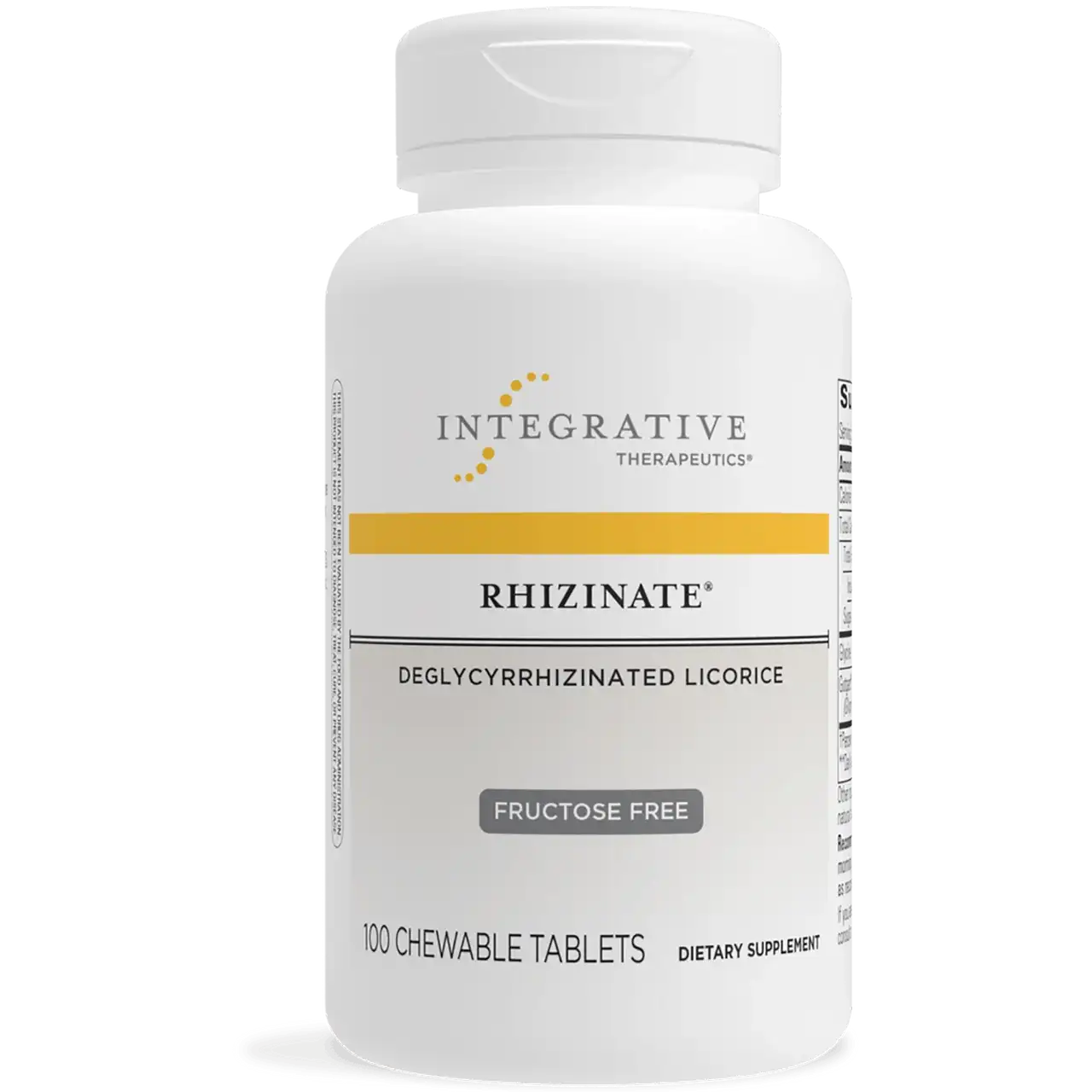
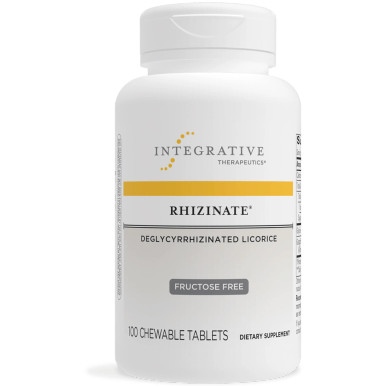
Rhizinate Fructose Free is a chewable deglycyrrhizinated licorice (DGL) tablet from Integrative Therapeutics, made for occasional stomach discomfort after foods like coffee, spicy dishes, or fried meals. Each three-tablet serving provides 75 mg of GutGard® DGL root extract and 150 mg of glycine, sweetened with sorbitol and mannitol instead of fructose, with 0 g of sugar. The label directions are three tablets chewed after food in the morning and three after food in the evening, six tablets a day in total. Integrative Therapeutics states that the formula contains less than 1% glycyrrhizin, the licorice compound that may elevate blood pressure in some individuals.
What is Rhizinate Chewable Integrative Therapeutics?
Search for Rhizinate Chewable Integrative Therapeutics and you'll find two products, not one: the original, which is sweetened partly with fructose, and Fructose Free. The active ingredients are the same in both. The only real difference is what makes the tablet taste like something you'd willingly chew six of a day.
The thinking behind the product is laid out plainly on the manufacturer's page. Your stomach keeps an acidic pH on purpose, because acid starts digestion and helps defend against microbes. The tissue lining the stomach has to be shielded from that same acid, and the shield is a layer of mucin. When that barrier is doing its job, the stomach stays comfortable. Integrative Therapeutics positions DGL as a plant-based way to support that lining, noting that DGL has been shown in animal studies to support the mucosal lining of the stomach and intestines, and that Rhizinate works by stimulating natural protective factors in the digestive tract.
"Deglycyrrhizinated" is the important word. Ordinary licorice root contains glycyrrhizin, and the National Center for Complementary and Integrative Health warns that glycyrrhizin can cause serious adverse effects, especially in large amounts or over long periods, and in people with high blood pressure or heart or kidney conditions. DGL is licorice with most of that compound removed. It's the reason a licorice supplement for everyday stomach comfort can exist at all.
What makes this a practitioner-grade product rather than a drugstore one is the extract. Rhizinate Fructose Free uses GutGard®, a branded, standardized DGL extract made by Natural Remedies Pvt. Ltd. Many retail DGL chewables list an unnamed "DGL extract" and leave it there.
One thing most write-ups get wrong: comparing DGL products by milligrams. Rhizinate's own earlier formula listed 760 mg of a 3:1 DGL extract per two tablets. The current one lists 75 mg of GutGard per three. Those are different materials, and the numbers aren't a like-for-like comparison. Integrative Therapeutics hasn't published an equivalence between the two, so we won't invent one. If you have an older bottle of Rhizinate Chewable Integrative Therapeutics at home that says two tablets twenty minutes before meals, that was the previous formula. Follow the directions on the bottle you're actually holding.
Rhizinate 100t Fructose-Free Chewable
$16.00
Rhizinate 100t Fructose-Free Chewable by Integrative Therapeutics Integrative Therapeutics Rhizinate Fructose-Free is a chewable formula that provides fast relief for digestive discomfort. This product… Click here to read more
What's in Rhizinate Fructose Free, and what does each ingredient do?
The Supplement Facts panel is short. Per three chewable tablets: 5 calories, 2 g total carbohydrate, 0 g sugars, 2 g sugar alcohol, 150 mg glycine, and 75 mg GutGard® deglycyrrhizinated licorice (Glycyrrhiza spp.) root extract. Other ingredients are sorbitol, mannitol, stearic acid, cellulose, natural flavor, silica, and magnesium stearate. It is dairy free, vegan, gluten free, and vegetarian, and contains no wheat, soy, sugar, or artificial colors.
GutGard® DGL (75 mg)
GutGard is a flavonoid-rich licorice extract, and most of the published work on it has been done by or with its maker. In one rat study of GutGard, researchers gave the extract at 12.5 to 50 mg per kilogram of body weight and measured its effect on the stomach lining and on antioxidant activity. That is the kind of evidence behind the manufacturer's wording. It's animal work, and Integrative Therapeutics says so directly rather than dressing it up.
The broader DGL literature runs in the same direction and goes back decades. A 1979 experiment gave rats 60 mg of aspirin, a drug known to irritate the stomach lining, alongside 100 to 500 mg of deglycyrrhizinated licorice, and the DGL reduced the surface damage the aspirin caused. The proposed mechanism across this research is the one on the Rhizinate label: supporting the stomach's own protective layer rather than changing its acidity.
Glycine (150 mg)
Glycine is the smallest amino acid, and it shows up in a lot of DGL formulas. Integrative Therapeutics lists it on the label but doesn't describe a specific job for it, so we won't assign one. It happens to taste faintly sweet, which suits a chewable, though the company doesn't say whether that's why it's there. Glycine is also the ingredient behind the one negative drug interaction Integrative Therapeutics lists for this product: it may reduce the effectiveness of clozapine. The safety section below covers it.
Sorbitol and mannitol: the fructose-free catch
This is the detail almost nobody mentions. "Fructose free" appeals to people who avoid fructose, and many of them are following a low-FODMAP diet. Sorbitol and mannitol are polyols, and polyols are the "P" in FODMAP. So fructose free does not automatically mean FODMAP friendly.
Each serving carries 2 g of sugar alcohol, about 4 g a day at the full label dose. Plenty of people tolerate that with no trouble. Someone who knows sorbitol gives them gas or loose stools should know it's the main sweetener here before buying a bottle.
Who is Rhizinate Fructose Free a good fit for?
The manufacturer describes a specific person: someone who experiences occasional discomfort after coffee, spicy food, or fried food. That framing is narrower than most DGL marketing, and it's the right one. Situations where Rhizinate Fructose Free makes sense:
- A person like Stephen, whose discomfort tracks with particular foods and shows up some days, not every day.
- The third-cup-of-coffee office worker who notices the pattern and would rather support the stomach lining than keep reaching for something chalky.
- Anyone limiting sugar. The original Rhizinate has 1 g of added sugar per serving from fructose; this version has none.
- People who like the idea of licorice but were put off by what they read about glycyrrhizin and blood pressure.
- Capsule-averse adults. Some people simply won't swallow pills, and a chewable removes that argument.
Who should skip it or check with a professional first?
The manufacturer's warning is direct: if you are pregnant, nursing, or taking any medications, consult a healthcare professional before use. That includes over-the-counter medications, not just prescriptions.
- People with high blood pressure. Integrative Therapeutics states that Rhizinate contains less than 1% glycyrrhizin, which may elevate blood pressure in some individuals. Low is not zero. Talk to your doctor before starting.
- Children. The directions are written for adults. Keep the bottle out of reach of children.
- People who react to sugar alcohols, or anyone on a strict low-FODMAP plan.
- Anyone taking clozapine. The manufacturer's interaction checker lists glycine as reducing the effectiveness of clozapine. Don't start Rhizinate without talking to the prescriber first.
- Anyone whose symptoms are frequent or getting worse. See a clinician before reaching for any supplement.
If you're not sure whether this fits your situation, Holistic Health Partners offers a free product consultation.
How does Rhizinate Chewable Integrative Therapeutics compare to other options?
The honest comparison isn't only between Rhizinate versions. It's also against the antacid most people already have in a kitchen drawer.
| Rhizinate Fructose Free | Rhizinate (original) | Calcium carbonate antacid | |
|---|---|---|---|
| Active ingredient | 75 mg GutGard® DGL + 150 mg glycine per 3 tablets | Same: 75 mg GutGard® DGL + 150 mg glycine | Calcium carbonate |
| How it works | Supports the stomach's protective mucosal lining | Same | Neutralizes stomach acid on contact |
| Sweetener | Sorbitol, mannitol (0 g sugar) | Fructose, mannitol, sorbitol (1 g added sugar) | Varies by brand; many contain sugar |
| Speed | Not designed for instant relief | Not designed for instant relief | Faster. Works within minutes |
| Label dose | 3 after food, morning and evening | 3 after food, morning and evening | As needed, per package |
| 100-count bottle lasts | About 16 days | About 16 days | Depends on use |
| Best for | Sugar-conscious adults with occasional, food-linked discomfort | The same person, if sugar and polyols aren't a concern | A one-off night when you need relief now |
The antacid column wins on speed, and there's no point pretending otherwise. If you ate badly once and want to feel better in ten minutes, that's what antacids are built for. DGL is a different approach aimed at a different problem: the lining, not the acid. Between the two Rhizinate versions, the choice comes down to sweetener. If fructose doesn't bother you and sugar alcohols do, the original may actually suit you better. Both versions of Rhizinate Chewable Integrative Therapeutics are $16 at Covenant.
How much Rhizinate should I take, and when?
The current label directions for Rhizinate Fructose Free: adults chew 3 tablets after food in the morning and 3 tablets after food in the evening, or as recommended by a healthcare professional. That's six tablets a day, and the directions are identical for both versions of Rhizinate Chewable Integrative Therapeutics.
Chew them fully. It's a chewable for a reason, and DGL has traditionally been taken this way rather than swallowed whole. Integrative Therapeutics doesn't explain why it moved the timing to after food (the earlier formula said before meals), so we'd go with what's printed on the current bottle rather than older advice you'll find online.
Do the bottle math before you buy. At six a day, 100 tablets last about 16 days, which works out to roughly a dollar a day at $16 a bottle. The manufacturer doesn't give a timeframe for evaluating results. One bottle is a reasonable trial period, especially if you jot down what you ate on the days you felt fine and the days you didn't. That food note often tells you more than the supplement does.
What won't Rhizinate do?
It won't neutralize acid. Anyone expecting Rhizinate Chewable Integrative Therapeutics to behave like an antacid will be disappointed within the first hour.
It won't make a daily habit consequence-free. If the discomfort follows the fourth coffee or the spicy lunch every single time, the lining is telling you something about the coffee and the lunch. DGL is support, not permission.
It isn't the right tool for every kind of stomach complaint. Heaviness and slow digestion after large meals is often a different issue entirely, and a digestive enzyme such as Integrative Therapeutics Similase or Pure Encapsulations Digestive Enzymes Ultra may be the better conversation to have. Some practitioners also look at stomach acid levels, which we cover in our guide to Premier Research Labs HCL. Those are opposite approaches to DGL, and choosing the wrong one wastes money. We would rather you buy the right supplement than more of them.
And it won't replace a doctor's visit when the signs call for one. Trouble or pain when swallowing, vomiting, black or bloody stools, unexplained weight loss, or chest pain all need medical attention, not a chewable.
Finally, it probably isn't for you if chewing six tablets a day sounds like a chore you'll quit by Thursday. Consistency matters more than the formula.
Rhizinate 100t Fructose-Free Chewable
$16.00
Rhizinate 100t Fructose-Free Chewable by Integrative Therapeutics Integrative Therapeutics Rhizinate Fructose-Free is a chewable formula that provides fast relief for digestive discomfort. This product… Click here to read more
Is Rhizinate safe? Side effects and interactions
The manufacturer's warning, in full: If you are pregnant, nursing, or taking any medications, consult a healthcare professional before use. Keep out of reach of children. Do not use if the inner safety seal is broken or missing.
On blood pressure, Integrative Therapeutics states that Rhizinate contains less than 1% glycyrrhizin, which may elevate blood pressure in some individuals. The deglycyrrhizination is what makes that number low, but people who already have high blood pressure, or heart or kidney conditions, should treat this as a conversation with their doctor first. The NCCIH licorice root fact sheet explains why the glycyrrhizin content matters.
Integrative Therapeutics' drug-nutrient interaction checker lists one negative interaction for this product: glycine may reduce the effectiveness of clozapine. If you take clozapine, talk with your prescriber before using Rhizinate. The checker also lists glycine alongside a number of other psychiatric medications. Those entries aren't a reason to add a supplement on your own, and any change to a regimen that includes them belongs with the prescribing clinician. For any other prescription, bring the bottle to your pharmacist and ask them to check it against what you're on. That takes two minutes and is worth it.
The side effect most people are likely to notice, if any, comes from the sweeteners rather than the DGL: sorbitol and mannitol can cause gas or looser stools in sensitive people, especially at the full six-tablet daily dose.
As with any supplement, consult your healthcare provider before use, especially if you are pregnant, nursing, or taking medications.
Is Rhizinate Chewable Integrative Therapeutics worth it?
For the right person, yes. If your stomach discomfort is occasional, clearly linked to certain foods, and you want a DGL made with a named, standardized extract and no sugar, Rhizinate Fructose Free is a well-made, inexpensive way to support your stomach lining.
It's a weaker fit if you need fast relief, if sugar alcohols bother you, or if your symptoms happen daily. The trade-off is the dose, and it's the same whichever version of Rhizinate Chewable Integrative Therapeutics you choose: six tablets a day means a bottle runs out in about two weeks.
For Stephen, that means reading the open tab, keeping the tasting spoon, and noticing whether four o'clock gets any quieter.
Not sure if this is the right product for you?
The licensed wellness professionals at Holistic Health Partners, led by Carolyn Mulally BS, RN, HN-BC, offer free product consultations — no appointment required. They can help you find the right supplement for your specific health goals.
Get a Free Consultation
These statements have not been evaluated by the Food and Drug Administration. This product is not intended to diagnose, treat, cure, or prevent any disease.