Liver GB Biocidin: Ingredients, Dosage & Who It Suits
Table of Contents
- What is Liver GB Biocidin?
- What's in Liver GB Biocidin, and how does each ingredient work?
- Who may benefit from it?
- Who should not take it?
- How does Liver GB Biocidin compare to a plain milk thistle capsule?
- How do you take it?
- What won't it do?
- What are the safety considerations?
- Is Liver GB Biocidin worth it?
- FAQs
The card in Marlene's apron pocket reads Liver GB Biocidin, written out in her nutritionist's hand back in March. It has gone soft at the corners since. She has laminated croissant dough by hand for nineteen years and can hear when the butter has gone too cold — the sheeter makes a dry ticking sound instead of a soft one.
She is fifty-four. For about eight months, the part of the job she used to like least, the 5 a.m. tasting, has become the part she dreads. Two bites of anything rich and a dull pressure sets up under her right ribs and stays there until lunch. She still hasn't looked the card up.
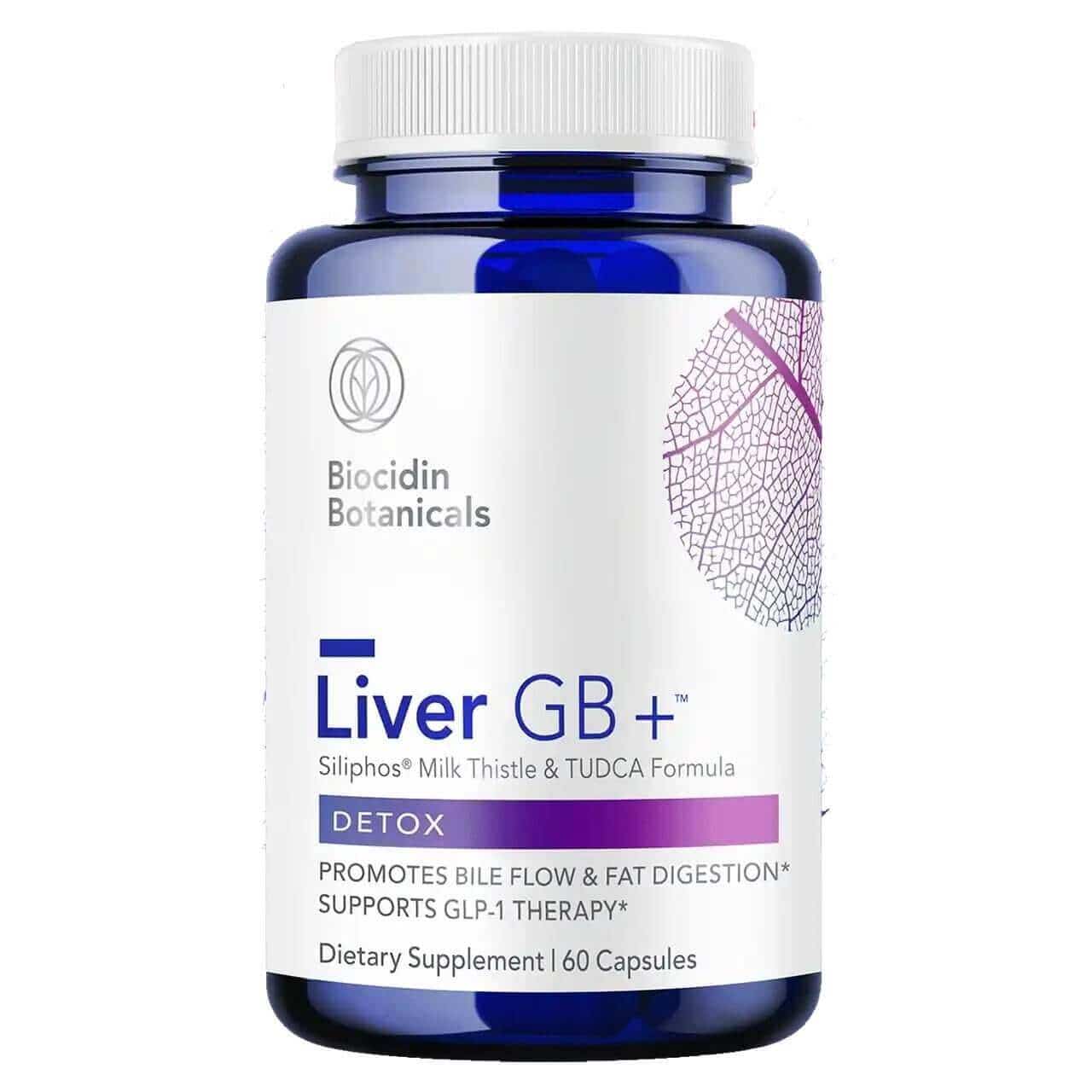
Liver GB Biocidin is a seven-ingredient capsule built around bile rather than around antioxidants. Two capsules supply 250 mg of artichoke leaf extract, 240 mg of Siliphos milk thistle fruit extract bound to phosphatidylcholine, 150 mg of turmeric root extract at 95% curcuminoids, and 100 mg of TUDCA, with tangerine peel, ginger and bupleurum rounding out the formula. The label makes two claims: that it promotes bile flow and fat digestion, and that it supports GLP-1 therapy. The dose is two capsules daily with meals, and a bottle holds thirty servings. It is aimed at people whose complaint is specifically about fat — heaviness after rich food — rather than at general fatigue.
What is Liver GB Biocidin?
Most liver supplements are antioxidant formulas. They load silymarin, NAC or alpha-lipoic acid and aim at protecting liver cells from oxidative stress. This one starts from a different premise: that for a lot of people the bottleneck isn't the liver cell at all, it's the bile — how much gets made, how freely it moves, and what it's made of. The GB in the name is gallbladder.
That premise shows up in the ingredient selection, and it shows up in the doses. Artichoke leaf gets the largest allocation in the formula at 250 mg, ahead of the milk thistle. In a conventional liver product the milk thistle would lead and the artichoke would be a garnish. Here the order is reversed, which is a design decision rather than an accident.
The other thing worth noticing is what the panel doesn't say. Every ingredient in Liver GB Biocidin is listed with its own individual dose. There is no proprietary blend. That sounds like a small thing until you compare it to the retail shelf, where a dozen botanicals routinely hide behind a single line reading “Liver Detox Complex 600 mg” — a label that makes it impossible to know whether the artichoke inside is at 250 mg or at 25 mg. When a manufacturer discloses each dose, you can evaluate the formula. When it doesn't, you're evaluating the marketing.
The label also states that the formula supports GLP-1 therapy; if you take a GLP-1 medication, that belongs in a conversation with the clinician who prescribed it, and we've written separately about liver support during GLP-1 treatment.
Liver GB+ 60c
$59.99
Liver GB+ by Biocidin Botanicals Introduction: Liver GB+ is a comprehensive botanical and nutrient formula designed to support healthy liver function, bile flow, and gastrointestinal… Click here to read more
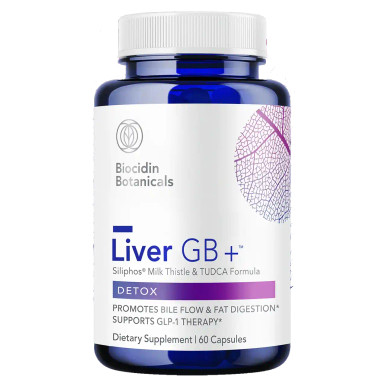
What's in Liver GB Biocidin, and how does each ingredient work?
Artichoke leaf extract, 250 mg (5% cynarin)
Artichoke is the largest single dose in the bottle, which tells you what the formula is for. Its bitter compounds, chiefly cynarin and chlorogenic acid, act as a choleretic: they prompt the liver to produce more bile, as opposed to a cholagogue, which squeezes out bile the gallbladder has already stored. The distinction matters. Increasing production is a slower, steadier effect than forcing a release, and it's the reason artichoke is usually taken as a daily support rather than as something you reach for after a heavy meal.
Siliphos milk thistle fruit extract, 240 mg
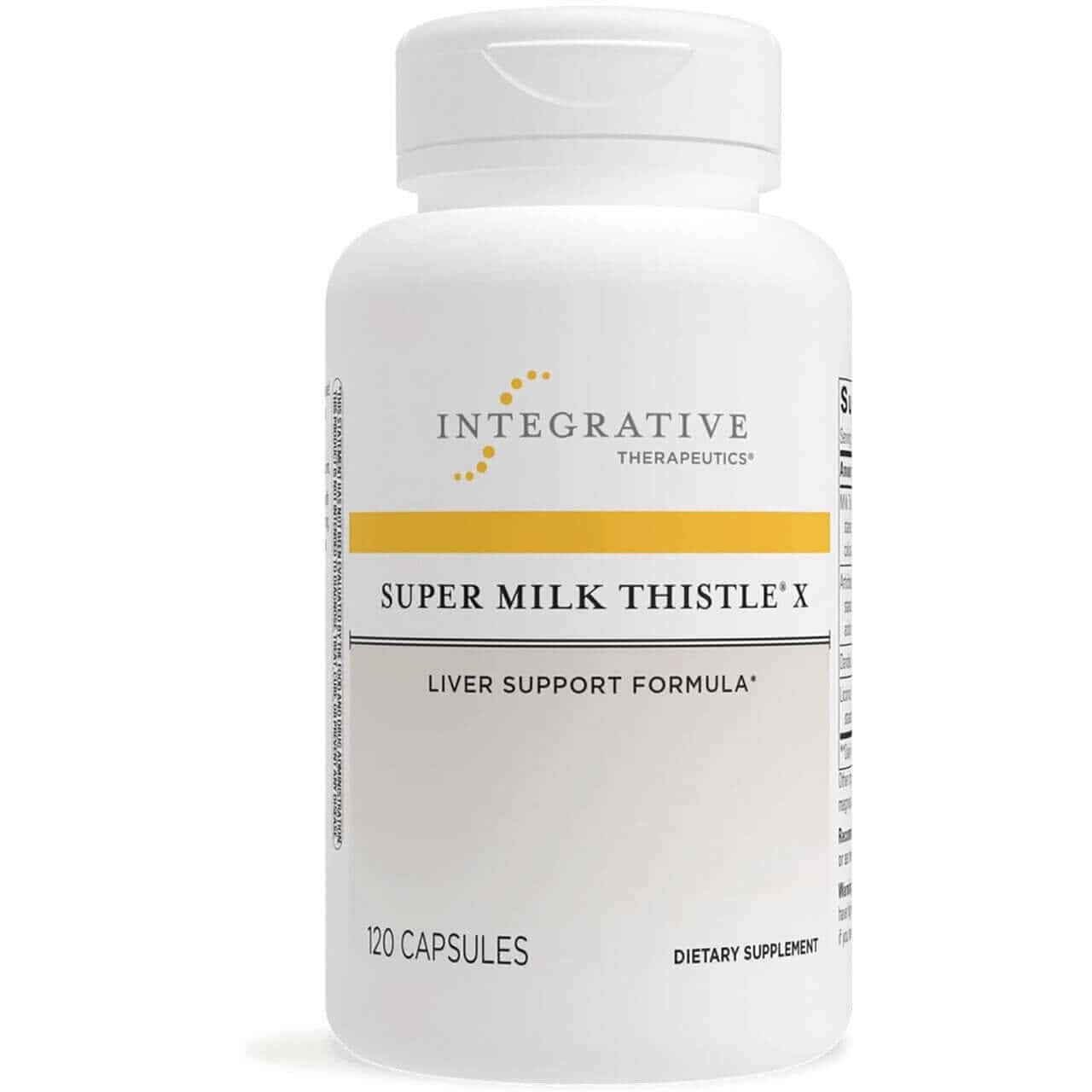
Silybin is the most active of the milk thistle flavonolignans and also the worst behaved. It barely dissolves in water and gets heavily metabolized before it reaches circulation, which is why a lot of standard milk thistle ends up as an expensive way to make dark urine. Siliphos addresses this by complexing silybin with phosphatidylcholine into what's called a phytosome — effectively wrapping the molecule in a lipid shell that the intestinal membrane is far more willing to let through.
The practical consequence is that 240 mg here should not be mentally compared against 240 mg of a generic extract. It's a different absorption profile, not a smaller serving of the same thing. This is also the one place in the formula where Biocidin paid for engineered delivery rather than raw milligrams, and it's worth knowing where they spent the money.
Two details from the label are easy to miss and worth having. The extract is drawn from the fruit, which is where milk thistle actually concentrates its flavonolignans — note the contrast with the artichoke above it, which is a leaf extract. And the phosphatidylcholine is sourced from sunflower lecithin rather than soy. Most phytosome ingredients on the market use soy lecithin, so for anyone avoiding soy, that single sourcing decision is the difference between this formula being an option and being off the table.
Turmeric root extract, 150 mg (95% curcuminoids)
Curcumin is choleretic in its own right and supports a normal inflammatory response, which is presumably why it earns a spot in a bile formula rather than being there because turmeric sells.
Here's the part most write-ups skip. The curcumin in Liver GB Biocidin is a plain 95% curcuminoid extract. No piperine, no phospholipid carrier, no nanoparticle anything. Curcumin in that unenhanced form is poorly absorbed — that limitation is the entire reason the supplement industry invented a dozen branded curcumin delivery systems. So the formula that engineered its milk thistle for absorption did not do the same for its turmeric. Treat the 150 mg as a supporting contribution rather than as a headline dose, and be skeptical of anyone who describes it otherwise.
Tauroursodeoxycholic acid (TUDCA), 100 mg
Bile acids are not interchangeable. Some are hydrophobic and relatively harsh on cell membranes; TUDCA is hydrophilic and taurine-conjugated, which makes it one of the gentler species in the pool. Adding it shifts the overall composition of bile rather than simply increasing the volume — a different lever from the one artichoke pulls. It has also drawn research interest as a chemical chaperone, a molecule that helps proteins fold correctly and eases stress on the cellular machinery that does the folding.
Be realistic about the dose. Standalone TUDCA products generally run 250 mg to 500 mg per serving, and much of the published work uses more than that. The 100 mg in this formula is a real inclusion but a modest one; if TUDCA specifically is what you're after, a dedicated TUDCA supplement will give you two to five times as much.
Tangerine peel extract, 100 mg (10:1)
Known as chen pi in Chinese herbal practice, where dried and aged citrus peel is a standard remedy for the heavy, stuck feeling after eating. It contributes flavonoids including hesperidin and nobiletin. The 10:1 notation means 100 mg of extract represents roughly one gram of the dried peel.
Ginger root extract, 50 mg (5% gingerols)
Ginger's most consistently documented digestive effect is on gastric emptying and gut motility — it helps move things along rather than acting on the liver directly. At 50 mg this is a small inclusion, well below what a ginger study would typically use, and it's more honest to call it formula balance than an active dose.
Bupleurum root extract, 25 mg (10:1)
The smallest dose in the bottle, and the one that tells you most about the formula's lineage. Bupleurum, or chai hu, is a cornerstone of traditional Chinese liver formulas, where it functions as a directing herb rather than a workhorse. Its presence at 25 mg is a signal about design philosophy. Nobody is getting a therapeutic bupleurum dose here, and the formula isn't pretending otherwise.
Who may benefit from it?
- People whose symptom is specifically fat-triggered — the queasiness or right-sided pressure that follows a cream sauce but never follows a bowl of rice.
- Anyone working through a practitioner-guided detox protocol, since bile is the physical route by which fat-soluble compounds actually leave the liver and exit the body.
- Someone already on a plain milk thistle capsule who wants bile support added rather than simply more silymarin.
- Anyone who needs a phytosome milk thistle but reacts to soy, since the phosphatidylcholine here comes from sunflower.
- People who've had a gallbladder removed and have been told by a clinician to support bile handling. Read the safety section before acting on this one.
Who should not take it?
A formula designed to increase bile flow is the wrong tool for anyone with a known blockage. If you have gallstones, a bile duct obstruction, or an inflamed gallbladder, do not start this without a physician clearing it first — stimulating bile production against an obstruction is the specific scenario to avoid.
Skip it, or get clearance, if you are pregnant or nursing, if you take anticoagulant or antiplatelet medication, or if you have any diagnosed liver or biliary condition under active management. And if your complaint is fatigue, brain fog or a flagged enzyme result with no fat-related symptom at all, this formula is aimed somewhere other than your problem.
Biocidin prints its own warnings on the bottle. Read them, and treat them as taking precedence over anything written here.
How does Liver GB Biocidin compare to a plain milk thistle capsule?
| Liver GB+ | Standard milk thistle (80% silymarin) | Standalone TUDCA | |
|---|---|---|---|
| Primary target | Bile production, flow and composition | Liver cell antioxidant support | Bile acid composition only |
| Milk thistle form | Siliphos phytosome, 240 mg | Unformulated extract, often 250–600 mg | None |
| TUDCA | 100 mg | None | 250–500 mg typical |
| Total silymarin per dollar | Lower | Higher — this is where a plain extract wins | Not applicable |
| Fat-digestion support | Artichoke, turmeric, ginger, TUDCA | None | Partial |
| Best for | Fat-triggered discomfort; practitioner detox protocols | Milk thistle specifically, at volume | A targeted TUDCA dose |
The honest summary: if milk thistle is what you actually want, buy milk thistle. A standard 80% silymarin product will hand you considerably more of it for the money, and there is no sense paying for artichoke, TUDCA and bupleurum you weren't looking for. Liver GB Biocidin earns its price only if the bile-directed architecture is the thing you need.
If you're not sure whether this fits your situation, Holistic Health Partners offers a free product consultation.
How do you take it?
Two capsules of Liver GB Biocidin daily with meals, or as directed by your healthcare practitioner. The bottle holds sixty capsules and thirty servings, so that's a one-month supply at label dose.
The “with meals” instruction isn't boilerplate here, it's mechanism. Bile release is triggered by food arriving in the small intestine, and by fat in particular. Taking a bile-directed formula on an empty stomach means asking the system to do something it has no reason to do at that moment. If both of your main meals are substantial, splitting the dose — one capsule at each — is a reasonable approach and spreads the support across the day.
On timing expectations: digestive comfort tends to be one of the faster-responding things in supplementation, and people who respond often notice something inside one to two weeks. Give it the full bottle before deciding. If thirty days produce no change at all, that's genuinely useful information, and the right response is to take it back to your practitioner rather than to double the dose.
What won't it do?
It won't dissolve gallstones or resolve an obstruction. Those are medical problems with medical answers.
It won't correct fat malabsorption that stems from pancreatic enzyme insufficiency. That's an enzyme shortage, not a bile shortage, and no quantity of artichoke changes it — which is exactly why getting the diagnosis right matters more than picking the supplement.
It isn't a weight loss product, and nothing on the label claims it is.
It isn't a binder either. Binders and bile-support formulas get shelved together and discussed together, but they do opposite things: one mops up in the gut, the other increases flow. If a practitioner told you to take a binder, this is not that.
And it won't outrun the diet underneath it. If the pressure under the ribs shows up reliably after fried food four nights a week, the capsule is the smallest variable in that equation. We'd rather say so than sell you a bottle that quietly competes with your dinner. The goal here isn't for you to buy more supplements — it's for you to buy the right ones.
Liver GB+ 60c
$59.99
Liver GB+ by Biocidin Botanicals Introduction: Liver GB+ is a comprehensive botanical and nutrient formula designed to support healthy liver function, bile flow, and gastrointestinal… Click here to read more
What are the safety considerations?
The central caution follows directly from what the formula does. Artichoke and turmeric both increase bile production, and TUDCA alters the bile acid pool. That combination is the point of the product and also the reason it is the wrong product for anyone with gallstones, a bile duct obstruction, or acute gallbladder inflammation. Clearance from a physician first, in every one of those cases.
Turmeric at 150 mg of 95% curcuminoids warrants a conversation with your pharmacist if you take an anticoagulant or antiplatelet drug. If you've had your gallbladder removed, bile handling is permanently changed and a bile-directed formula should be supervised rather than self-prescribed. Pregnancy and nursing are not settings where concentrated botanical extracts have established safety, so avoid unless a clinician directs otherwise.
As with any supplement, consult your healthcare provider before use, especially if you are pregnant, nursing, or taking medications.
Is Liver GB Biocidin worth it?
It's worth it for a fairly specific person: someone whose discomfort is tied to fat rather than to fatigue, who wants bile addressed as a system rather than wanting one more antioxidant, and who values a fully disclosed panel enough to pay for it. The Siliphos is a real piece of formulation work and the TUDCA is a real inclusion, if a modest one.
The trade-off is equally specific. You are buying a seven-ingredient formula in which two ingredients carry most of the weight, one of them — the turmeric — arrives without the absorption support its neighbour got, and two of them sit at doses that are structural rather than therapeutic. If you want maximum silymarin, or a serious TUDCA dose, buy those separately and spend less.
Marlene's appointment card is still in her apron. If she does look it up, the useful thing for her to know is that this formula is aimed precisely at the complaint she actually has — and that if a month of it changes nothing, that's information worth carrying back to her nutritionist rather than a reason to take four capsules.
Not sure if this is the right product for you?
The licensed wellness professionals at Holistic Health Partners, led by Carolyn Mulally BS, RN, HN-BC, offer free product consultations — no appointment required. They can help you find the right supplement for your specific health goals.
Get a Free Consultation
These statements have not been evaluated by the Food and Drug Administration. This product is not intended to diagnose, treat, cure, or prevent any disease.