Dentalcidin Toothpaste Biocidin: Ingredients & Usage
Table of Contents
- What Is Dentalcidin Toothpaste Biocidin?
- What Are the Ingredients in Dentalcidin Toothpaste Biocidin?
- Who Should Use Dentalcidin Toothpaste Biocidin?
- How Does Dentalcidin Toothpaste Biocidin Compare to Fluoride Toothpaste?
- How Do You Use Dentalcidin Toothpaste Biocidin?
- What Dentalcidin Toothpaste Biocidin Won't Do
- Is Dentalcidin Toothpaste Biocidin Safe?
- Is Dentalcidin Toothpaste Biocidin Worth It?
- FAQs
Gus's hygienist wrote three words on the back of his appointment card for him to look up: dentalcidin toothpaste biocidin. He put the card in his trombone case and left it there for a month.
He has played trombone in the same community orchestra for thirty-one years, pressing a brass mouthpiece against the same two square centimeters of his upper lip and gum. He knows the spot. At his last cleaning she had lingered there, asked whether he was brushing differently, and told him the tissue looked irritated and the buildup behind his lower front teeth was returning faster than it should.
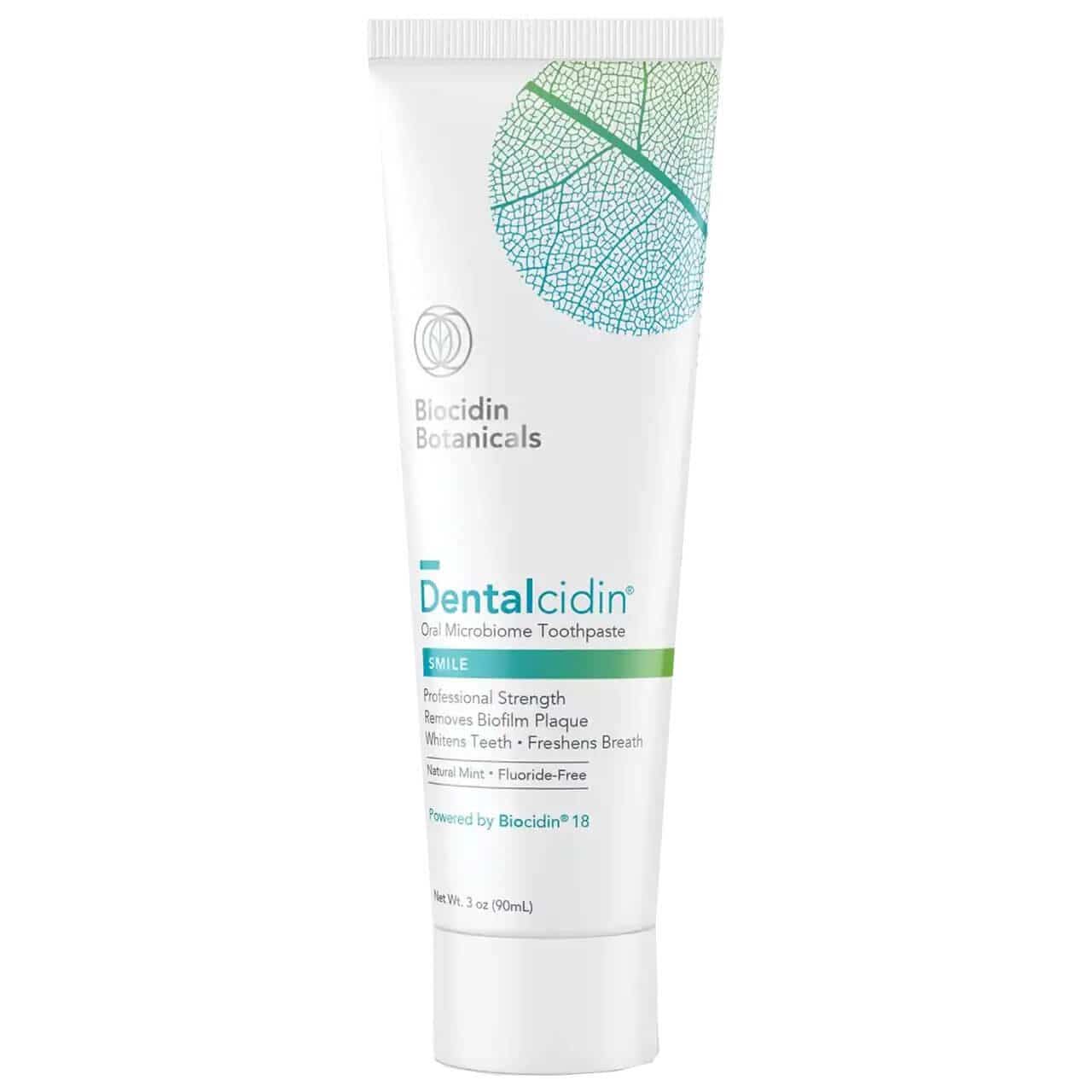
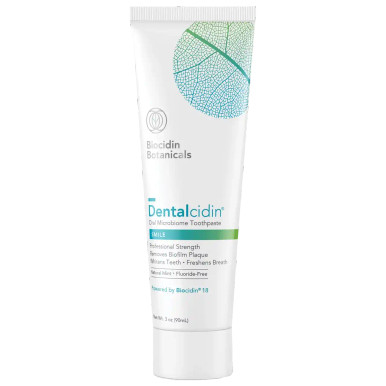
Dentalcidin Toothpaste is a fluoride-free, plant-based toothpaste from Biocidin Botanicals built around Biocidin, the company's proprietary blend of 18 botanical extracts and essential oils. Biocidin Botanicals describes it as an oral microbiome toothpaste and states that it removes oral biofilms (plaque) and supports oral microbiome balance, healthy gums, and periodontal and gingival health.* It whitens teeth, freshens breath, uses a natural mint flavor, and is formulated to be gentle enough for sensitive teeth. The directions are to brush with it two to three times daily. One tube holds 3 oz (90 mL). It contains walnut.
What Is Dentalcidin Toothpaste Biocidin?
Biocidin Botanicals started as Bio-Botanical Research in 1989, and its reputation rests almost entirely on one formula: Biocidin, a liquid botanical blend that practitioners have used in gut protocols for decades. The Dentalcidin toothpaste Biocidin Botanicals sells today is that same blend, reformulated into a paste base. The label reads "Professional Strength" and "Powered by Biocidin 18."
The reason this matters is that most botanical toothpastes are assembled the other way around. A manufacturer starts with a conventional paste base, adds neem or tea tree at a token concentration, and puts a leaf on the box. Dentalcidin starts from an existing clinical formula and builds the paste around it. Biocidin appears second in the ingredient list, immediately after sorbitol, which in a toothpaste means it is present at a meaningful fraction of the total rather than as a trace flavor note.
It is also sold as one part of a two-step system. Biocidin Botanicals positions the toothpaste as Step 1 and the Dentalcidin LS Liposomal Rinse as Step 2, used after brushing and flossing. The rinse is a different formula with its own ingredients, including CoQ10, quercetin, clove and myrrh. Those belong to the rinse, not to the toothpaste, and the two products should not be evaluated as though they were interchangeable.
Dentalcidin Toothpaste 3oz.
$29.99
Dentalcidin Toothpaste 3oz. by Biocidin Botanicals Dentalcidin Toothpaste by Biocidin Botanicals is enriched with the potent blend of 18 botanicals found in Biocidin. This advanced toothpaste… Click here to read more
What Are the Ingredients in Dentalcidin Toothpaste Biocidin?
Most people who search for dentalcidin toothpaste biocidin are really after this list. Most of it is the Biocidin blend. Here is what the working parts actually do.
Biocidin: the 18-botanical blend
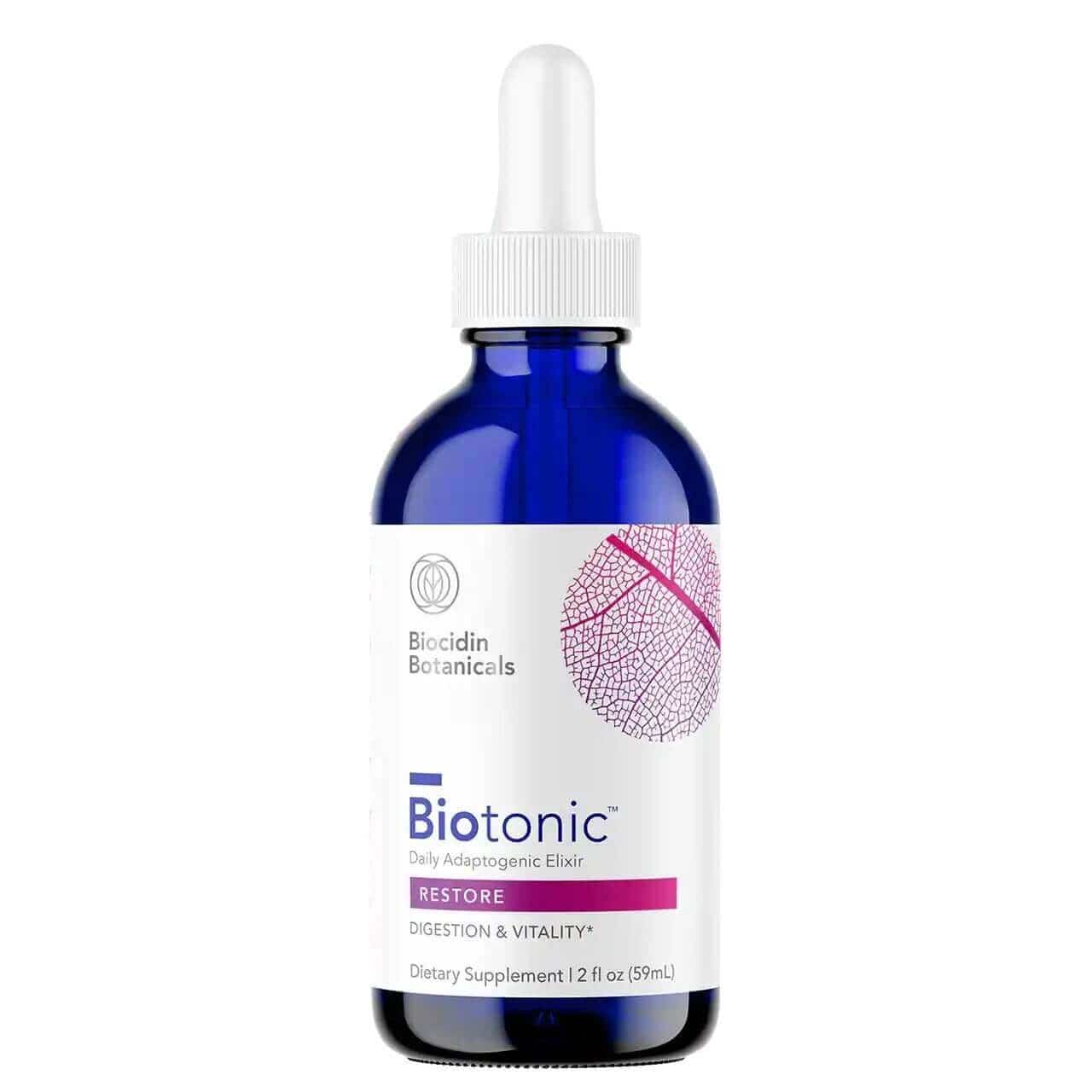
Bilberry fruit, grape seed, shiitake mushroom, goldenseal root, noni fruit, garlic bulb, white willow bark, milk thistle seed, raspberry fruit, echinacea purpurea, echinacea angustifolia, black walnut hull, black walnut leaf, lavender oil, oregano oil, galbanum oil, tea tree oil, fumitory, and gentian root. This is the same base found in the company's flagship liquid, which we covered in our write-up of Biotonic by Biocidin Botanicals.
The oral-care rationale rests mostly on the essential oil fraction. Lavender, oregano, tea tree and galbanum oils carry the phenolic and terpene compounds that laboratory work has studied against oral bacteria. The botanical extracts contribute polyphenols and tannins, which is a weaker and less direct story, and the manufacturer does not make ingredient-specific claims about them.
Oregano and tea tree oils
Oregano oil's principal active is carvacrol, a monoterpenoid phenol. The interesting property for a toothpaste is not that carvacrol kills free-floating bacteria in a test tube, which almost anything does, but that it has shown activity against preformed biofilms. One in vitro study tested carvacrol against multi-species biofilms already established on titanium discs and found measurable effect on the mature biofilm, not just on planktonic cultures. That distinction is the whole problem with plaque. Bacteria inside a biofilm sit under a polysaccharide matrix that blunts anything applied to the surface, which is why plaque resists agents that work fine against loose bacteria.
Worth reading the label closely here: tea tree oil appears twice in the ingredient list, once inside the Biocidin blend and again on its own near the end. That is not an error. It means tea tree is present both as part of the proprietary formula and as a separately added ingredient.
Sodium lauroyl sarcosinate, which is not sodium lauryl sulfate
This is the single most misread ingredient on the tube, and it is where most reviews of this product get it wrong. Sodium lauroyl sarcosinate and sodium lauryl sulfate have nearly identical names and are different compounds. The sulfate is the aggressive foaming detergent in most drugstore paste. The sarcosinate is a milder amino-acid-derived surfactant.
The distinction has some clinical weight. A body of research has examined whether SLS aggravates recurrent aphthous ulcers, the ordinary canker sore, on the theory that it strips the protective mucin layer. A scoping review of SLS side effects in toothpastes catalogued reported mucosal effects, and several small trials found fewer ulcers on SLS-free paste. The honest version is that the evidence is genuinely mixed, and at least one controlled study found no significant difference at all. If SLS has never bothered you, this ingredient swap is not a reason to switch. If you get ulcers after every brushing, it is worth a trial.
Hydrated silica
The abrasive. It does the actual mechanical work of removing plaque, and no toothpaste on the market dissolves biofilm chemically without brushing. Botanicals do not change that. A soft brush used for two minutes twice a day removes more plaque than any ingredient list.
Sorbitol
First on the list, and the one people flinch at, because it sounds like sugar. It is a sugar alcohol used as a humectant to keep the paste from drying out. Oral bacteria ferment it slowly and poorly, which is why it has been used in "sugar-free" dental products for decades.
The detail almost nobody mentions: sorbitol is not xylitol. Xylitol is essentially non-fermentable by oral bacteria. Sorbitol is slowly fermentable, and research has looked at whether oral flora can adapt to sorbitol over time and shift toward organisms that metabolize it. In a toothpaste that you spit out, the exposure is brief and the practical concern is small. It is still not the same thing as xylitol, and products that imply otherwise are overselling.
The remainder
Vegetable glycerin, cellulose gum, aloe, tocopherol, natural organic flavor, and a citrus and spice group: peppermint oil, cinnamon oil, clove oil, tangerine, bitter orange and sweet orange extracts, plus ascorbic, citric and lactic acids serving as flavor, antioxidant and pH components. The finished paste is made without dairy, gluten, soy, corn, animal products, artificial coloring or flavoring.
Who Should Use Dentalcidin Toothpaste Biocidin?
- People whose hygienist keeps flagging fast plaque return between cleanings, and who have already ruled out technique as the cause.
- Anyone who reacts to conventional paste with canker sores or sloughing tissue, and wants a surfactant that isn't SLS.
- Patients already running Biocidin products for gut work whose practitioner wants the oral end of the microbiome addressed at the same time.
- Adults who have decided against fluoride for their own reasons and want a formulation with a stated rationale rather than a baking soda paste with a leaf on the box.
- People with sensitive teeth, since the manufacturer formulates it as a gentle clean.
Who should not use Dentalcidin Toothpaste Biocidin
Anyone with a walnut or tree nut allergy. Biocidin Botanicals states plainly: Contains walnut. Black walnut hull and black walnut leaf are both in the blend. This is not a "check with your doctor" situation for a diagnosed nut allergy.
Biocidin Botanicals publishes no pediatric guidance for this product, so it should not be assumed appropriate for young children simply because it is fluoride-free. If you are pregnant or nursing, it is wiser to check with your provider before adding it.
How Does Dentalcidin Toothpaste Biocidin Compare to Fluoride Toothpaste?
| Dentalcidin Toothpaste | Conventional fluoride toothpaste | |
|---|---|---|
| Approach | 18-botanical blend targeting biofilm and oral microbiome balance | Fluoride for enamel; often an antimicrobial agent added separately |
| Cavity prevention | No caries claim made, and none should be inferred | Wins outright. The strongest evidence base in preventive dentistry |
| Plaque and gingival scores | Botanical pastes perform variably in trials | Often stronger. One six-month study found a fluoride/triclosan paste beat a herbal comparator by 35% on gingival index |
| Surfactant | Sodium lauroyl sarcosinate | Usually sodium lauryl sulfate |
| Sweetener | Sorbitol | Sorbitol, saccharin or xylitol |
| Cost per tube | Practitioner-grade pricing | A fraction of the cost |
Two clarifications on that table, because the comparison deserves them. The six-month trial referenced was run on a herbal and bicarbonate paste, not on Dentalcidin, so it is evidence about the category rather than about this product. And "wins outright" on cavity prevention is not a hedge. Fluoride's caries evidence is among the most replicated findings in dentistry, and a fluoride-free paste does not compete with it on that dimension. Choosing Dentalcidin means choosing a different objective.
Within Biocidin's own line there is a second distinction worth knowing. Dentalmin PRO is the company's remineralizing toothpaste, built on a different prebiotic botanical blend. Dentalcidin is not a remineralizing product and is not marketed as one. If enamel remineralization is your goal, you are looking at the wrong tube.
If you aren't sure whether this fits your situation, Holistic Health Partners offers a free product consultation. We would rather you buy the right thing once than the wrong thing twice.
How Do You Use Dentalcidin Toothpaste Biocidin?
Biocidin Botanicals suggests brushing with Dentalcidin Toothpaste two to three times daily. The company also notes that a little goes a long way, which is not marketing softness. This is a concentrated botanical paste with a strong essential oil load, and a pea-sized amount is the standard reference for any toothpaste regardless of brand.
It is formulated for use with Dentalcidin LS Liposomal Rinse, which the manufacturer directs to be used two to three times daily after brushing and flossing. The toothpaste works on its own. The system is how Biocidin Botanicals intends it to be used.
On timeline: breath and the smooth-feeling surface are things people notice within days, because those are immediate effects of cleaning. Anything involving gum tissue moves on tissue time, not product time, and a reasonable evaluation window is a full cleaning-to-cleaning interval, typically three to six months, judged by what your hygienist records rather than by how your mouth feels. A 3 oz tube brushed two to three times daily will not last that long, so plan on more than one tube before you can judge it.
What Dentalcidin Toothpaste Biocidin Won't Do
It will not prevent cavities. It contains no fluoride, Biocidin Botanicals makes no caries claim, and a systematic review of non-fluoride actives for caries prevention found the clinical evidence for alternatives thin by comparison. If you or your children are cavity-prone, this is the wrong primary paste, and no amount of botanical quality changes that arithmetic.
It will not treat gum disease. If your gums bleed when you brush, that is a finding, and it belongs in front of a dentist rather than in a shopping cart. Diagnosed periodontitis is managed with scaling, root planing and professional follow-up. A toothpaste is an adjunct to that, never a substitute, and anyone selling you one as a substitute is doing you harm.
It will not remove tartar. Once plaque mineralizes into calculus, it comes off with a hygienist's scaler and nothing else. No paste on any shelf reverses that.
It will not whiten like a peroxide product. "Whitens teeth" here means the removal of surface stain through cleaning. Anyone expecting bleaching-tray results will be disappointed.
And it will not save you money. A tube of drugstore fluoride paste costs a small fraction of this and, for the specific job of preventing cavities, does that job better. If the botanical blend and the surfactant are not solving a problem you actually have, the cheaper tube is the better buy. We would rather say that than sell you something you don't need.
Dentalcidin Toothpaste 3oz.
$29.99
Dentalcidin Toothpaste 3oz. by Biocidin Botanicals Dentalcidin Toothpaste by Biocidin Botanicals is enriched with the potent blend of 18 botanicals found in Biocidin. This advanced toothpaste… Click here to read more
Is Dentalcidin Toothpaste Biocidin Safe?
The manufacturer's stated allergen is unambiguous: Contains walnut. Black walnut hull and leaf are part of the Biocidin blend, and anyone with a tree nut allergy should not use this product.
It is made without dairy, gluten, soy, corn, animal products, artificial coloring or flavoring. It contains a substantial essential oil fraction, including oregano, tea tree, clove, cinnamon and peppermint oils, and essential oils can irritate oral tissue in sensitive individuals. If you develop burning, persistent irritation or tissue changes, stop using it and speak with your dentist.
As with any supplement, consult your healthcare provider before use, especially if you are pregnant, nursing, or taking medications.
Is Dentalcidin Toothpaste Biocidin Worth It?
It is worth it for a specific person: someone whose plaque comes back faster than their brushing habits explain, who reacts badly to conventional detergent pastes, or who is already working with a practitioner on microbiome protocols and wants the mouth included. For that person, Dentalcidin Toothpaste is a well-constructed product built on a formula with a long clinical track record, and the sarcosinate base alone may justify it.
It is not worth it if you are cavity-prone, if you want remineralization, or if you are buying it because botanical sounds better than conventional. The trade-off is real and it is not hidden: you are giving up the single best-evidenced anti-caries ingredient in dentistry in exchange for a biofilm and microbiome strategy that has a plausible mechanism and thinner clinical proof. That is a legitimate choice for some people and a poor one for others.
Gus eventually took the card out of the trombone case. What his hygienist gave him was a starting point, not an answer, and the next appointment is what will tell him anything.
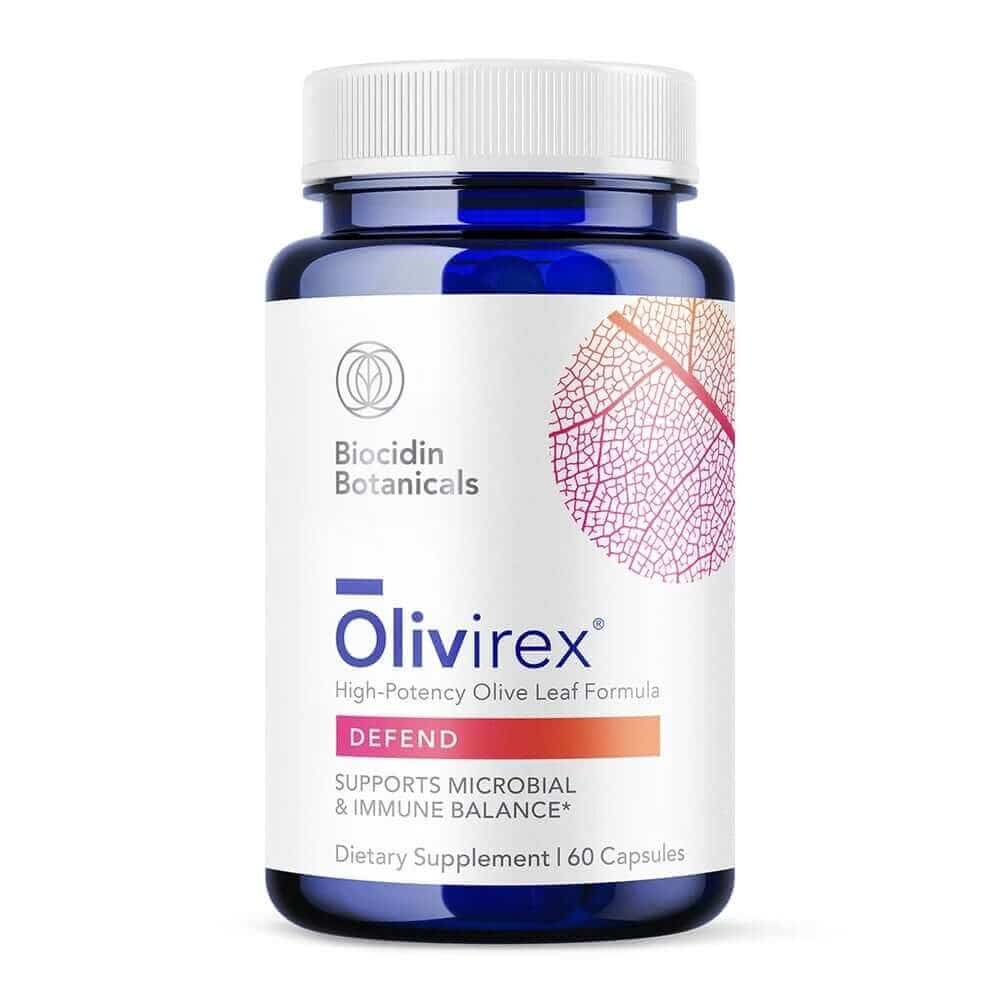
If the microbiome angle is what interests you, our pieces on Olivirex by Biocidin and on Anaerostipes probiotic and gut restoration cover the other end of the same system.
Not sure if this is the right product for you?
The licensed wellness professionals at Holistic Health Partners, led by Carolyn Mulally BS, RN, HN-BC, offer free product consultations — no appointment required. They can help you find the right supplement for your specific health goals.
Get a Free Consultation
These statements have not been evaluated by the Food and Drug Administration. This product is not intended to diagnose, treat, cure, or prevent any disease.