Best Creatine for Women: 5 Picks and Who Each Fits
Table of Contents
- What is the best creatine for women?
- Why do women take creatine, and what does it do?
- Do women need a special creatine made for women?
- How do the best creatine supplements for women compare?
- Who does each creatine fit?
- How much creatine should a woman take, and when?
- Will creatine make you gain weight or look puffy?
- Who should skip creatine, or check first?
- Is creatine worth taking after 40, or after menopause?
- The bottom line on the best creatine for women
- FAQs
Quick answer: The best creatine for women is plain creatine monohydrate, 3 to 5 grams a day, from a brand that tests what goes in the tub. Women do not need a special "for her" formula: the research in women uses the same monohydrate and the same doses studied in men. Take it every day (consistency matters more than timing) and give it three to four weeks to build up in your muscles.
Clinical review pending — Holistic Health Partners
Rosalind Achterberg and Dinah Kowalczyk, both fictional, share a squat rack at their community center. Rosalind, a 52-year-old orchestra teacher, takes plain creatine; her physical therapist suggested it while she rebuilt the strength to haul cello cases upstairs. Dinah, a 46-year-old land surveyor, won't touch it. "That's for the guys grunting in the corner," she says. "And I'm not paying to get puffy." Rosalind slides her phone across the bench: five tubs, five labels, one ingredient in common.
Dinah's two objections are the ones we hear most about creatine for women, so this guide answers both, then compares those five labels.
What is the best creatine for women?
The best creatine for women is unflavored creatine monohydrate that delivers 5 grams per serving and nothing you did not ask for. Monohydrate is the form behind nearly all of the research, and a 2021 review by a panel of creatine researchers concluded that other forms are not superior to it (Antonio et al., 2021). So the choice comes down to testing, serving count, cost per day and whether you want anything else in the scoop.
To find the best creatine for women, our team compared five creatine powders we carry from the professional brands we trust most: Thorne® Creatine, Xymogen® Creatine, Pure Encapsulations® Creatine, Metagenics® Creatine UP® and Ortho Molecular Products Creatine. Each is the right pick for a different woman.
Why do women take creatine, and what does it do?
Creatine helps your muscles recycle ATP, the molecule cells spend for quick energy during short, hard efforts: the last three reps, a flight of stairs with groceries. Supplementing raises the creatine stored in muscle, which is why the International Society of Sports Nutrition ties it to better high-intensity performance and training adaptations (Kreider et al., 2017).
Women have their own reasons to pay attention. A review of creatine in women's health reports that females have 70 to 80% lower endogenous creatine stores than males and tend to eat less of it, since it comes almost entirely from meat and fish (Smith-Ryan et al., 2021). The same review found creatine effective for strength and exercise performance in premenopausal women.
After menopause, it depends on what you pair it with. A meta-analysis of ten randomized trials in older women found that creatine added to resistance training increased strength, most clearly in trials lasting 24 weeks or longer, but did not find an effect on muscle mass (Dos Santos et al., 2021). Creatine supports the training you do. It does not replace it.
Do women need a special creatine made for women?
No. There is no female-specific form, and the research on creatine for women used ordinary creatine monohydrate. Smith-Ryan and colleagues state that women can follow the same dosing strategy recommended for men. A pink label or a "hormone blend" changes the price, not the creatine. When you shop for creatine for women, check four things on the label:
- The form. "Creatine monohydrate." Micronized means finer particles that mix more easily; it is the same compound.
- The dose. 5 g per serving lets you take a full or partial scoop.
- What else is in it. Sweeteners, flavors and added actives are a preference, not a requirement.
- Testing. NSF Certified for Sport® means an outside lab checked the product against its label and screened it for banned substances.
How do the best creatine supplements for women compare?
Here are our five picks for the best creatine for women side by side, from the manufacturers' product pages and our own listings. Prices are from November 2026 and may change.
| Thorne Creatine | Xymogen Creatine | Pure Encapsulations Creatine | Metagenics Creatine UP | Ortho Molecular Creatine | |
|---|---|---|---|---|---|
| Creatine monohydrate per serving | 5 g (1 scoop), micronized | 5 g (1 level scoop) | 5 g (1½ teaspoons; no scoop in the tub) | 5 g (1 scoop) | 5 g (1 scoop) |
| Anything else in the scoop | Nothing | Nothing | Nothing | Betaine 1 g, taurine 0.75 g | Nothing |
| Servings per container | 90 (180 also available) | About 90 | About 60 (315 g) | 60 | About 90 |
| Third-party certification | NSF Certified for Sport | NSF Certified for Sport | None listed | None listed | None listed |
| Cost (Nov 2026) | $44.00 (about $0.49 a serving) | $39.99 (about $0.44 a serving) | $35.00 (about $0.58 a serving) | $55.95 (about $0.93 a serving) | Available through our clinic |
| Best for | The default pick; tested athletes | Lowest cost per day with certification | Sensitive to additives; smallest outlay | Women who want betaine and taurine too | Clinic patients who want guidance |
Four of the five are the same thing in a different tub: 5 g of creatine monohydrate and nothing else. You can choose on testing, price and serving count without worrying that you picked the "weak" one.
Who does each creatine fit?
The right creatine for women is the one that matches how you train and what you will take every day.
Thorne Creatine: who it fits
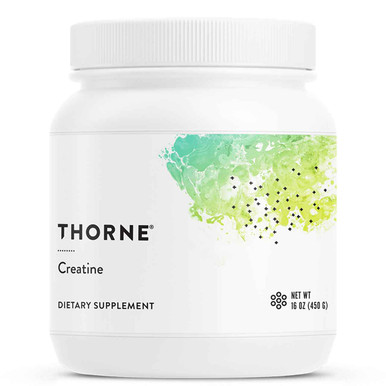
Thorne Creatine is the one we would hand most women who ask where to start. One scoop is 5 g of micronized creatine monohydrate with no flavors, sweeteners or fillers, 90 servings per tub, and it is NSF Certified for Sport. Thorne's own guidance is plain: one scoop daily, and consistency matters more than timing. Our Thorne Creatine guide goes deeper.
Creatine Powder
$44.00
Creatine by Thorne – Muscle Performance Support Creatine by Thorne provides 5 grams of micronized creatine monohydrate per serving to support muscle performance, strength, and… Click here to read more
Xymogen Creatine: who it fits
Xymogen Creatine fits the woman who wants the same certification at the lowest daily cost, about $0.44 a serving. It is a single-ingredient powder, 5 g per level scoop and about 90 servings, NSF Certified for Sport and formulated without animal products, gluten, dairy, soy or GMOs. Our Xymogen Creatine post covers it in detail.
Creatine 90 Servings
$39.99
Creatine Monohydrate Powder by Xymogen – NSF Certified for Sport Creatine Supplement Creatine by Xymogen 90 Servings NSF Certified for Sport is a high-quality creatine… Click here to read more

Pure Encapsulations Creatine: who it fits
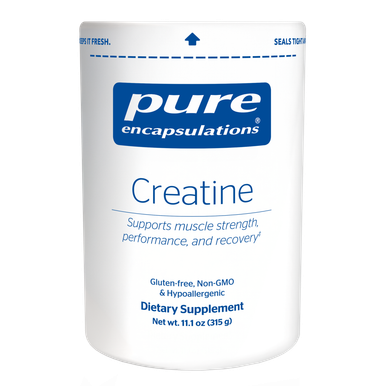
Pure Encapsulations Creatine fits the woman who reads the "free from" panel first. Pure formulates without wheat, soy, dairy, eggs, tree nuts, peanuts, gluten, artificial colors and sweeteners. A serving is 1½ teaspoons (5 g), about 60 servings per tub, and it ships without a plastic scoop, so you measure with a kitchen teaspoon. It has the lowest price per tub here, though not the lowest cost per serving.
Creatine Powder 315 g
$35.00
Creatine® by Pure Encapsulations – Muscle Strength and Sports Performance Support Creatine by Pure Encapsulations is a convenient powdered formula designed to support muscle strength,… Click here to read more
Metagenics Creatine UP: who it fits
Metagenics Creatine UP fits the woman who wants more than creatine in one scoop: each serving adds 1 g of betaine and 0.75 g of taurine to the 5 g of creatine monohydrate. It is unflavored, vegetarian and gluten-free, with 60 servings. Its label suggests an optional loading week, and it carries more cautions than the single-ingredient powders, including for pregnancy and nursing, so read the safety section below first.
Creatine UP 16.93 oz
$55.95
Creatine UP 16.93 oz by Metagenics – Muscle Strength Support Creatine Powder Creatine UP 16.93 oz by Metagenics is an unflavored creatine powder that combines… Click here to read more

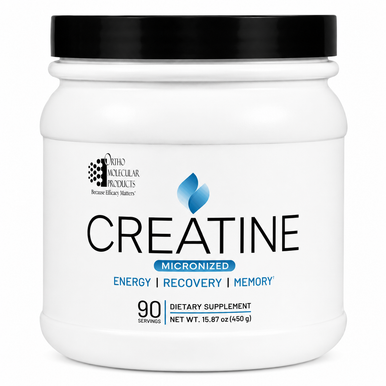
Ortho Molecular Products Creatine: who it fits
Ortho Molecular Products Creatine fits the woman who wants a practitioner's input before she starts. It is a single-ingredient powder, 5 g per scoop and about 90 servings, with no gluten, corn, yeast or artificial colors or flavors. Ortho Molecular Products is a practitioner-channel brand, so this one is available through our clinic, Holistic Health Partners.
Creatine 90SVG
$36.20
Creatine by Ortho Molecular Products – Muscle and Cellular Energy Support Creatine by Ortho Molecular Products is an unflavored creatine monohydrate powder that supplies 5… Click here to read more
How much creatine should a woman take, and when?
Three to five grams a day, every day, and you do not have to load. The 2021 expert review concluded that 3 to 5 g a day is effective and a loading phase is not required. The women's health review found a daily 5 g dose fills muscle stores as well as loading; it just takes three to four weeks instead of five days (Hultman et al., 1996, found the same with 3 g a day in men).
| Question | What the labels and research say |
|---|---|
| Daily dose | One 5 g serving on all five labels. A rounded half scoop to a full scoop covers the 3 to 5 g range. |
| Loading | Optional, and when temporary water weight is most likely. Only the Creatine UP label suggests it. |
| When | Any time you will remember, in 8 oz of water or another beverage. Rest days too. |
| How long before judging it | At least four weeks, alongside regular strength training. |
Will creatine make you gain weight or look puffy?
Usually not in the way people fear, and less so in women than in men. Creatine pulls water into muscle cells, not under the skin. The women's health review calls the fear of weight gain "largely unfounded, particularly in women," and notes that studies in women show strength gains without marked changes in body weight. The expert review adds that creatine does not increase fat mass. If the scale matters to you, skip the loading week. Dinah, for the record, found that more persuasive than anything about ATP.
Who should skip creatine, or check first?
Creatine monohydrate has a long safety record in healthy adults. Still, creatine for women is not for every woman. Talk with a clinician first:
- If you are pregnant or nursing. The Metagenics label says do not use; Thorne, Pure and Ortho Molecular say to consult your practitioner.
- If you have a kidney, liver or heart condition, or take medication that affects kidney function or fluid balance. Pure's and Metagenics' labels both name kidney disease.
- If you have lab work coming up. Creatine can raise creatinine, a marker labs use to estimate kidney function, so tell whoever orders your labs.
- If you are under 18. Pure's label says it is not intended for anyone under 18.
Is creatine worth taking after 40, or after menopause?
For women who strength train, yes, with realistic expectations. In older women, creatine plus resistance training improved strength more than training alone when programs ran at least 24 weeks, without added muscle mass. For creatine for women after 40, 3 to 5 g a day with two or three strength sessions a week is the pattern the evidence supports. Choosing a daily multi too? See our guide to the best multivitamin for women by life stage.
The bottom line on the best creatine for women
The best creatine for women is the plain one you will take daily. For most, that is Thorne Creatine. Xymogen gives you the same certification for less per day, Pure Encapsulations suits the additive-averse, Metagenics Creatine UP adds betaine and taurine, and Ortho Molecular Products Creatine suits the woman who wants to start with a practitioner's guidance. Whichever creatine for women you choose, take 3 to 5 g a day, keep lifting, and judge it after a month.
FAQs
Is creatine safe for women?
For healthy adult women, creatine monohydrate at 3 to 5 g a day has a long safety record, and the International Society of Sports Nutrition describes it as safe and well tolerated. Women who are pregnant or nursing, have a kidney, liver or heart condition, or take prescription medication should check with their clinician first.
Should a woman take 3 g or 5 g of creatine a day?
Either works. A 2021 expert review found 3 to 5 g a day effective. All five powders here give 5 g per serving, so a rounded half scoop gets you to about 3 g. Taking it every day matters more than the exact amount.
Do women need a creatine loading phase?
No. Loading fills muscle stores faster, but a steady 5 g a day reaches the same level in about three to four weeks. Skipping it also avoids the stage when temporary water weight is most likely.
Will creatine make me gain weight?
Some women see the scale move a pound or two in the first weeks, mostly with loading doses. That is water held inside muscle, not fat; research reviews report creatine does not increase fat mass.
Is there a creatine made specifically for women?
Not in any meaningful sense. Products marketed to women use the same creatine monohydrate, and the research in women used ordinary monohydrate at the same doses studied in men. A plain, tested powder such as Thorne Creatine is the straightforward choice.
When is the best time of day for a woman to take creatine?
Whenever you will remember it. Creatine works by keeping muscle stores full over weeks, so consistency matters more than the clock. Take it on training days and rest days alike.
Keep reading
- Creatine Powder by Thorne: what the research says
- Creatine by Xymogen, NSF Certified for Sport: a closer look
- Best multivitamin for women: how to choose by life stage
Not sure if this is the right product for you?
The licensed wellness professionals at Holistic Health Partners, led by Carolyn Mulally BS, RN, HN-BC, offer free product consultations — no appointment required. They can help you find the right supplement for your specific health goals.
Get a Free Consultation
These statements have not been evaluated by the Food and Drug Administration. This product is not intended to diagnose, treat, cure, or prevent any disease.