Best Ashwagandha Supplement: What We Look For, Who Each Fits
Table of Contents
- What is the best ashwagandha supplement?
- What should you look for on an ashwagandha label?
- What does the research say about ashwagandha?
- How do the best ashwagandha supplements compare?
- Who does each ashwagandha supplement fit?
- How do you take ashwagandha?
- Who should skip ashwagandha, or check first?
- Is it better to take ashwagandha in the morning or at night?
- Is more withanolide always better?
- The bottom line on the best ashwagandha supplement
- FAQs
Quick answer: The best ashwagandha supplement is the one that names its extract, plant part and standardization on the label, at a dose close to what has been studied in people. Published trials in stressed but otherwise healthy adults used about 240 to 600 mg of standardized extract a day for roughly eight weeks. A single-herb capsule suits most people who want to try ashwagandha on its own; a blend makes sense only when you also want its other ingredients. It is not for pregnancy or breastfeeding, and anyone on thyroid, blood sugar, blood pressure or sedative medication should check with their prescriber first.
Clinical review pending — Holistic Health Partners
Imogen Castellanos and her brother-in-law Walt Draper both said they took ashwagandha, and at a family cookout they found out they meant different things. Imogen, a fictional 51-year-old 911 dispatch supervisor, took one 500 mg capsule of root extract with breakfast, on her pharmacist's suggestion. Walt, a fictional 58-year-old freight scheduler, took a tablet at bedtime that a coworker had recommended. When he turned the bottle over, ashwagandha shared a blend with L-theanine and had no amount of its own. "So which of us is taking the real one?" he asked. Both of them, as it turns out.
That is the trouble with shopping for the best ashwagandha supplement: one plant name covers several very different extracts. Here is how our clinical team sorts them.
What is the best ashwagandha supplement?
There is no single winner, because "ashwagandha" on a front label can mean a root extract, a root-and-leaf extract, or a small share of a multi-ingredient blend, each at a different strength. The best ashwagandha supplement for you is the one whose extract and dose match what you want it for, from a maker that tells you exactly what is in the capsule.
Ashwagandha (Withania somnifera) is a shrub whose root has a long history in Ayurvedic practice as an adaptogen, a loose term for a botanical that supports the body's ability to adapt to everyday physical and mental stress. People most often take it to support a healthy stress response and restful sleep.
Our team compared four ashwagandha products we carry from the professional brands we trust most. Each one could be the right pick for a different person:
- Pure Encapsulations® Ashwagandha: a single-herb capsule with 500 mg of root extract standardized to 2.5% withanolides, and the lowest cost per day of the four.
- Xymogen® Ashwagandha 35: a single-herb capsule built on Shoden®, a root-and-leaf extract standardized to 35% withanolide glycosides, at 120 mg per capsule.
- Integrative Therapeutics® HPA Adapt: a daytime five-herb formula with 300 mg of SENSORIL® ashwagandha alongside rhodiola, eleuthero, holy basil and maca.
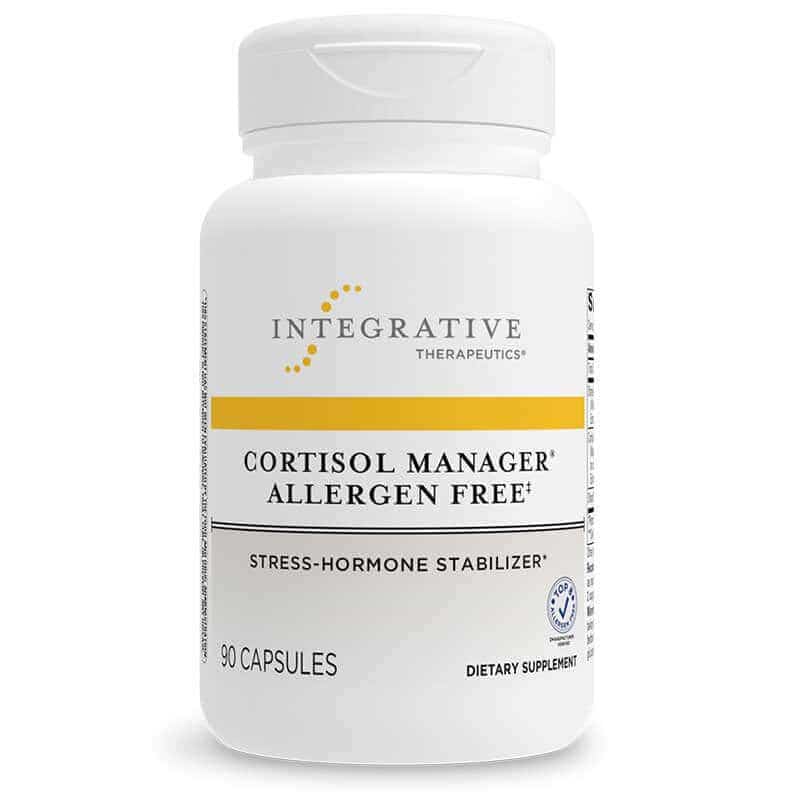
- Integrative Therapeutics Cortisol Manager: a bedtime tablet that pairs SENSORIL ashwagandha with L-theanine, magnolia, epimedium and phosphatidylserine.
What should you look for on an ashwagandha label?
On any ashwagandha supplement, look for four things: the plant part, the standardization, the amount of ashwagandha per serving, and whether it stands alone or sits inside a blend. Those four lines tell you more than anything on the front of the bottle.
- Plant part. The NIH Office of Dietary Supplements notes that the chemical makeup of ashwagandha root and leaf differ, and that most supplements use root extract while some use root and leaf together. Neither is automatically better. What matters is that the label says which one you are getting.
- Standardization. Withanolides are the plant compounds most extracts are measured by. A label that reads "standardized to 2.5% withanolides" or "35% withanolide glycosides" is telling you the extract is tested to a consistent level. A label that lists only "ashwagandha powder" is not.
- Amount per serving. Milligrams mean little without the standardization next to them. A 120 mg capsule of a concentrated extract and a 500 mg capsule of a lighter one can both be reasonable doses.
- Single herb or blend. In a proprietary blend, the ashwagandha amount may not be listed at all. That is not a flaw if you want the whole formula, but it means you cannot compare it milligram for milligram with a single-herb product.
You will also see branded extract names such as KSM-66, Sensoril and Shoden. They are different preparations made by different suppliers, which is why two bottles with the same herb on the front can list very different numbers on the back. Walt and Imogen were both right.
What does the research say about ashwagandha?
Human trials suggest that standardized ashwagandha extracts can support a healthy stress response and sleep quality over about eight weeks, though the studies are small and use different extracts. The NIH Office of Dietary Supplements, in its fact sheet for health professionals (updated May 2025), says it is hard to make firm recommendations precisely because the studies used various preparations and doses.
Three trials show the range:
- Root-and-leaf extract, 240 mg once a day. In a 60-day randomized, double-blind, placebo-controlled study, 60 stressed but healthy adults took 240 mg of Shoden extract or placebo daily. The ashwagandha group had greater reductions in morning cortisol and lower scores on a clinician-rated tension scale than the placebo group, with no adverse events reported (Lopresti et al., 2019).
- Root extract, 300 mg twice a day. In a 60-day placebo-controlled trial, 64 adults with a history of chronic stress took 300 mg of a high-concentration root extract twice daily. Scores on stress questionnaires and serum cortisol fell more than with placebo, and side effects were mild and similar in both groups (Chandrasekhar et al., 2012).
- Root extract, two doses compared. An eight-week trial gave stressed healthy adults 250 mg a day, 600 mg a day, or placebo. Both doses lowered perceived-stress scores and serum cortisol compared with placebo, and participants taking ashwagandha reported better sleep quality (Salve et al., 2019).
A 2021 review of the human and animal literature reached the same caution as the NIH: the variation among extracts "prevents a consensus" on the best preparation or dose (Speers et al., 2021). These are studies of ingredients, not of the finished products below, and none of them ran longer than about two months. The honest read: there is reasonable short-term evidence for stress and sleep support, and a real gap on long-term use.
How do the best ashwagandha supplements compare?
Here are the four products side by side, from the current manufacturer labels. Prices are from covenanthealthproducts.com in November 2026 and may change.
| Pure Encapsulations Ashwagandha | Xymogen Ashwagandha 35 | ITI HPA Adapt | ITI Cortisol Manager | |
|---|---|---|---|---|
| Type | Single herb | Single herb | Five-herb daytime blend | Bedtime blend |
| Form | Vegetarian capsule | Vegetarian capsule | Vegan capsule | Tablet |
| Ashwagandha extract | Root extract, 2.5% withanolides | Shoden root-and-leaf extract, 35% withanolide glycosides | SENSORIL root-and-leaf extract | SENSORIL root-and-leaf extract |
| Ashwagandha per label serving | 500 mg in 1 capsule | 240 mg in 2 capsules (120 mg each) | 300 mg in 4 capsules | Not listed separately; part of a 500 mg blend with L-theanine in 2 tablets |
| Other actives | None | None | Rhodiola 400 mg, eleuthero 300 mg, holy basil 200 mg, maca 150 mg | L-theanine, magnolia and epimedium (450 mg blend), phosphatidylserine 100 mg |
| Label directions | 1 capsule daily | 1 to 2 capsules daily | 2 to 4 capsules daily, empty stomach | 1 tablet before bedtime; 2 in times of high stress |
| Count | 60 or 120 capsules | 60 capsules | 120 capsules | 30 or 90 tablets |
| Price (Nov 2026) | $29.00 (60) or $52.00 (120); about $0.48 a day | $35.99; about $0.60 a day at 1 capsule, $1.20 at 2 | $39.50; about $0.66 a day at 2 capsules, $1.32 at 4 | $26.75 (30) or $70.75 (90); about $0.89 a night at 1 tablet |
| Best for | A simple, once-daily root extract at the lowest cost | A concentrated extract at the dose used in a published trial | Daytime support from several adaptogens at once | An evening wind-down formula |
One caution on the numbers: 2.5% withanolides and 35% withanolide glycosides are measured on different extracts with different yardsticks, so the percentages do not line up directly. A higher figure tells you the extract is more concentrated, which is why its capsule is smaller. It does not tell you the product is fourteen times stronger.
Who does each ashwagandha supplement fit?
The right pick is the one built for how and when you plan to take it. Here is who each of the four fits.
Pure Encapsulations Ashwagandha: who it fits
Pure Encapsulations Ashwagandha fits the person who wants ashwagandha and nothing else, once a day. Each capsule holds 500 mg of ashwagandha root extract standardized to 2.5% withanolides, which works out to about 12.5 mg of withanolides. The only other ingredients are plant cellulose and the vegetarian capsule. Pure Encapsulations lists it for adults 18 and up to help moderate occasional stress, and says its herbal extracts are tested for solvents, pesticides, heavy metals and microbial contaminants. The 60-capsule bottle is a two-month supply at the label dose, which makes it the least expensive way to give ashwagandha a fair trial.
Xymogen Ashwagandha 35: who it fits
Xymogen Ashwagandha 35 fits the person who wants to match a studied dose. Two capsules supply 240 mg of Shoden ashwagandha, a purified root-and-leaf extract standardized to 35% withanolide glycosides. That is the same extract and the same daily amount used in the 60-day Lopresti trial described above, though the trial tested the ingredient, not this finished product. Xymogen's label allows one to two capsules daily, so a bottle lasts one to two months. It is formulated without animal products, gluten, soy, dairy or corn, and Xymogen describes it as supporting a healthy stress response and restful sleep.
Integrative Therapeutics HPA Adapt: who it fits
HPA Adapt fits the person who wants daytime support and likes the idea of several adaptogens working together. A full four-capsule serving provides 300 mg of SENSORIL ashwagandha plus 400 mg of rhodiola, 300 mg of eleuthero, 200 mg of holy basil and 150 mg of maca, each with its standardization listed. Integrative Therapeutics positions it for a calm outlook, mental focus and stress-related fatigue, and directs it to be taken on an empty stomach in the morning and at mid-day. The trade-offs are pill count and complexity: with five herbs, it is harder to know which one is doing what, and there are more ingredients to check against your medications.
Integrative Therapeutics Cortisol Manager: who it fits
Cortisol Manager fits the person whose main goal is winding down at night. It is not really an ashwagandha supplement so much as a bedtime formula that contains ashwagandha: the SENSORIL extract shares a 500 mg blend with L-theanine, next to a magnolia and epimedium blend and 100 mg of phosphatidylserine. The individual ashwagandha amount is not disclosed. Integrative Therapeutics says the ingredients support healthy cortisol levels and promote relaxation to support restful sleep. It contains soy; the maker offers a separate allergen-free version. Our Cortisol Manager guide covers the formula in more detail.
How do you take ashwagandha?
The right ashwagandha dosage is the one on your product's label: take it once a day at a consistent time, and give it about eight weeks before you judge it. That is how long the main trials ran, and none of them reported an overnight change. Here is what each label says.
| Product | Label dose | When | With food? | Label upper amount |
|---|---|---|---|---|
| Pure Encapsulations Ashwagandha | 1 capsule (500 mg) daily | Label sets no time; pick one and keep it | With or between meals | 1 capsule, unless a health professional directs otherwise |
| Xymogen Ashwagandha 35 | 1 to 2 capsules (120 to 240 mg) daily | Label sets no time | Not specified | 2 capsules |
| HPA Adapt | 2 to 4 capsules daily | 2 in the morning and 2 at mid-day | Empty stomach | 4 capsules |
| Cortisol Manager | 1 tablet nightly | Before bedtime | Not specified | 2 tablets in times of high stress |
A few rules apply to any ashwagandha product:
- Start at the low end. If the label gives a range, begin with the smaller number for the first week or two. Drowsiness and an upset stomach are the most common complaints, and both are easier to spot at a low dose.
- Take one ashwagandha product, not two. HPA Adapt in the morning plus Cortisol Manager at night doubles up on the same extract. If you want both a day and a night formula, ask a practitioner to look at the totals.
- Set a review date. The NIH fact sheet says ashwagandha appears to be well tolerated for up to about three months and that long-term safety is not known. Put a check-in on the calendar at eight to twelve weeks rather than refilling indefinitely.
- Keep the basics. No capsule replaces sleep, regular meals and a workload you can sustain. Ashwagandha is a support, not a substitute.
Who should skip ashwagandha, or check first?
An ashwagandha supplement is not for everyone, and this is the part of the label most people skim. Skip it, or talk with your clinician before starting, if any of these apply:
- You are pregnant or breastfeeding. Pure Encapsulations states its product is not to be taken by pregnant or lactating women, Integrative Therapeutics says not to use Cortisol Manager if pregnant or nursing, and the NIH notes that some experts advise against ashwagandha in pregnancy.
- You have a thyroid condition or take thyroid hormone. The NIH fact sheet says ashwagandha might affect thyroid function. Your prescriber should know before you start, and may want to recheck your labs.
- You take prescription medication. Every label in this guide asks people on medication to consult a healthcare professional first. That matters most for medicines that affect blood sugar, blood pressure, the immune system, or that cause drowsiness. Both Integrative Therapeutics labels add that people with diabetes should monitor blood glucose closely.
- You have a liver condition or drink heavily. There are rare reports of liver injury in people taking ashwagandha. Stop and get medical attention if you notice yellowing of the skin or eyes, dark urine, or unusual fatigue.
- You are a man with hormone-sensitive prostate cancer. The NIH notes that some experts advise against use in this group.
- You have surgery scheduled, or an autoimmune condition. Tell your surgeon or specialist what you take and ask whether to stop.
- You need to avoid soy. Standard Cortisol Manager contains soy-derived phosphatidylserine.
Common side effects, according to the NIH, are usually mild: loose stools, nausea and drowsiness. If any supplement makes you feel worse, stop it and say so at your next appointment.
Is it better to take ashwagandha in the morning or at night?
Either can work. The published trials did not compare them, so when to take ashwagandha comes down to the product and your own response. The two single-herb labels set no time of day. HPA Adapt is written for morning and mid-day, and Cortisol Manager for bedtime. If a single-herb capsule makes you drowsy, move it to the evening. If you take it for daytime steadiness and feel fine, breakfast is the easiest time to remember. Consistency matters more than the clock.
Is more withanolide always better?
No. A higher withanolide percentage means a more concentrated extract, not a better result. The NIH fact sheet points out that withanolides are believed to drive many of ashwagandha's effects, but that other compounds in the plant may be involved too. The trials above saw support for stress response at 240 mg of a 35% extract and at 250 to 600 mg of root extract. What those studies share is a defined, standardized extract taken daily for weeks. That, more than the biggest number on the shelf, is what to shop for in an ashwagandha supplement.
The bottom line on the best ashwagandha supplement
Start with what you want it to do. For a straightforward, once-daily root extract at the lowest cost, Pure Encapsulations Ashwagandha is the simple choice. For a concentrated extract at a dose used in a published trial, Ashwagandha 35 is the match. For daytime support from several adaptogens, HPA Adapt covers more ground, and for an evening formula, Cortisol Manager is built for bedtime. Whichever you choose, take one ashwagandha product at a time, give it eight weeks, and review it with a professional before month three. Imogen kept her morning capsule. Walt kept his bedtime tablet, and now knows what is in it.
FAQs
How much ashwagandha should I take per day?
How long does ashwagandha take to work?
Can I take ashwagandha every day, and for how long?
What are the side effects of ashwagandha?
Is root-only ashwagandha better than a root-and-leaf extract?
Can I take ashwagandha with thyroid medication or other prescriptions?
Keep reading
- Cortisol Manager by Integrative Therapeutics: a closer look at the formula
- Cortisol Manager Calm: the drink-mix version for everyday stress
- Adaptogen supplements compared
Not sure if this is the right product for you?
The licensed wellness professionals at Holistic Health Partners, led by Carolyn Mulally BS, RN, HN-BC, offer free product consultations — no appointment required. They can help you find the right supplement for your specific health goals.
Get a Free Consultation
These statements have not been evaluated by the Food and Drug Administration. This product is not intended to diagnose, treat, cure, or prevent any disease.