Creatine Powder by Thorne: What the Research (and Real Users) Actually Say
Table of Contents
Thorne Creatine Powder: Benefits, Dosage & Research Guide
Marcus Delgado had never once opened a tub of protein powder in his life. At 52, he wasn't chasing a six-pack—he was chasing his 8-year-old daughter around a soccer field without needing to sit down halfway through the second half. A financial planner by trade and a spreadsheet obsessive by personality, Marcus usually ignored supplement trends. That changed when he started researching Creatine Powder by Thorne after watching a video comparing creatine to sodium bicarbonate for athletic performance. He wasn't an athlete, but the comment section was full of people his age sharing stories about better energy, sharper focus, and faster recovery after weekend hikes and everyday activities.
He did what any spreadsheet person does — he researched. He expected to find bodybuilder bravado online and instead found something else entirely: calm, repetitive, almost boring advice from people who'd actually used it. Skip the loading phase. Take 5 grams a day. Be patient. Pick a brand that's actually tested for what it says it contains. Three weeks in, Marcus noticed he wasn't gassed by the fourth quarter of his daughter's games anymore. Six weeks in, his Tuesday-night pickup basketball group asked what changed.
Marcus didn't do anything complicated. He just started taking Creatine Powder by Thorne, a single-ingredient, NSF Certified for Sport creatine monohydrate that's become one of the most talked-about supplements of 2026 — not because it's new, but because the science behind it keeps getting stronger, and more people outside the gym are finally paying attention. This guide walks through what creatine monohydrate actually does, who it's for, how it stacks up against other forms on the market, and how to use it well.
Creatine Powder
$44.00
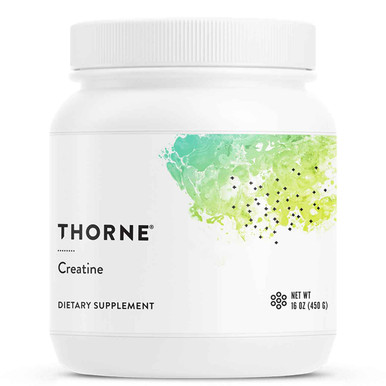
Creatine by Thorne – Muscle Performance Support Creatine by Thorne provides 5 grams of micronized creatine monohydrate per serving to support muscle performance, strength, and… Click here to read more
What Is Creatine Powder by Thorne?
Creatine Powder by Thorne is a single-ingredient, micronized creatine monohydrate supplement — no fillers, no flavor additives, no proprietary blends. Each serving delivers 5 grams of pure creatine monohydrate, the same form used in the overwhelming majority of clinical research on creatine over the past three decades.
Thorne, the manufacturer, has built its reputation onpractitioner-grade formulation standards. According to the company, every raw material entering their facility is tested before use, and finished formulas go through a minimum of four rounds of in-house testing to confirm purity, potency, and compliance with current Good Manufacturing Practice (cGMP) standards. Thorne's manufacturing campus also holds NSF certification — a designation the company describes as the "gold standard" for supplement quality assurance.
That NSF Certified for Sport status matters beyond just marketing language. It means the product has been independently tested to confirm the label is accurate, that it's free of unsafe contaminant levels, and that it's been screened against the banned-substance lists used by major sport organizations (including WADA, the NFL, and MLB). For anyone who's ever wondered "is what's on the label actually what's in the tub," this is about as close to a guarantee as the supplement industry offers.
Unlike some creatine products on the market that mix in additional ingredients — beta-alanine, electrolytes, or various "absorption enhancers" — Creatine Powder by Thorne is exactly one ingredient. That simplicity is intentional, and as we'll cover in the next section, it's also what the research actually supports.
Key Ingredients and How They Work
Creatine Monohydrate
Creatine monohydrate is the form used in the vast majority of published creatine research, and for good reason: it's the most extensively studied, most consistently effective, and most affordable form available. The 2018 position stand from the Journal of the International Society of Sports Nutrition identifies creatine monohydrate as the single most effective nutritional supplement currently available for increasing high-intensity exercise capacity and supporting lean muscle mass during training.
Here's the mechanism. Your muscles — and your brain — rely on a molecule called adenosine triphosphate (ATP) for virtually all cellular energy. During short, intense bursts of effort (a sprint, a heavy lift, a fast break down the court), your cells burn through available ATP quickly. Phosphocreatine, which your body stores using creatine, acts as a rapid-reserve energy bank. When ATP runs low, an enzyme called creatine kinase pulls a phosphate group off phosphocreatine and hands it to ADP (the "spent" form of ATP), instantly regenerating usable ATP. Supplementing with creatine increases how much phosphocreatine your muscle and brain tissue can store, which means you have a bigger reserve to draw on during demanding moments.
This isn't a muscle-only story. Research published in Frontiers in Nutrition (2025) describes a "muscle-brain axis" for creatine, noting its role in buffering ATP demand in neural tissue as well as skeletal muscle. Brain tissue runs on the same fundamental energy currency, and creatine's ability to support that system is part of why researchers have started looking at cognitive performance under fatigue, sleep deprivation, and even mild traumatic brain injury as areas where creatine may play a supportive role — though this research base is still earlier-stage than the decades of strength and performance data.
Micronization and Bioavailability
Creatine Powder by Thorne is micronized, meaning the particle size is reduced during processing. This improves solubility — the powder mixes into water more completely and doesn't leave the gritty residue some cheaper creatine products are known for. Better solubility doesn't just mean a nicer drinking experience; it also supports more consistent absorption. Creatine is transported into cells via a sodium-dependent creatine transporter, and multiple studies show that standard oral doses (5-20 grams per day) reliably raise muscle creatine and phosphocreatine stores within one to four weeks, depending on whether a loading protocol is used.
What Real Users Are Saying
Beyond the clinical literature, it's worth looking at what people who actually use creatine day-to-day report. Across online supplement communities, the conversation around dosing is strikingly consistent with the research: everyday users repeatedly point out that a loading phase isn't necessary, that 5 grams a day works just as well over a slightly longer timeline, and that staying hydrated resolves most of the minor digestive complaints people occasionally report. This kind of grassroots sentiment isn't clinical evidence, but it's a useful real-world check — when thousands of regular people arrive at the same conclusions as decades of published research, that's a meaningful signal that the science translates to everyday use.
These communities also frequently debate brand quality and purity — questions like "how do I know this is actually pure creatine monohydrate" come up often. That's precisely the gap third-party certifications like NSF Certified for Sport are designed to close, and it's part of why practitioner-grade, independently tested products tend to be the ones recommended most often in those discussions.
Who May Benefit From Creatine Powder by Thorne?
- Recreational athletes and weekend warriors looking to recover faster between sessions
- Anyone doing resistance training who wants to support strength and lean muscle mass gains
- Adults 35-60 interested in the emerging cognitive and brain-energy research, not just athletic performance
- People who've tried other creatine forms (HCl, ethyl ester, buffered) marketed as "better absorbed" and want the form with the deepest research base instead
- Anyone who wants third-party assurance that what's on the label is actually in the product — competitive athletes subject to drug testing in particular
- Vegetarians and vegans, who typically start with lower baseline muscle creatine stores (since dietary creatine comes primarily from meat and fish) and may notice benefits more readily
Who Should Use Caution
Creatine Powder by Thorne has an excellent long-term safety record in healthy adults, but a few groups should check with a healthcare provider first: anyone with diagnosed chronic kidney disease or significant renal impairment, anyone pregnant or nursing, and anyone taking medications that affect kidney function. If you experience persistent gastrointestinal discomfort, that's typically resolved by splitting the dose or taking it with food — but it's worth mentioning to your provider if it doesn't improve.
How It Compares to Standard Alternatives
Walk down any supplement aisle and you'll see creatine sold as monohydrate, HCl, ethyl ester, buffered ("kre-alkalyn"), and various blended formulas. Marketing for the alternative forms often claims better absorption or fewer digestive side effects. The research doesn't back most of these claims up.
| Factor | Creatine Monohydrate (Thorne) | Other Forms (HCl, Ethyl Ester, Buffered, Blends) |
|---|---|---|
| Research base | Decades of published clinical trials; the reference standard | Limited independent research; claims rely mostly on manufacturer marketing |
| Third-party testing | NSF Certified for Sport — tested for label accuracy, contaminants, banned substances | Varies widely; many products carry no independent certification |
| Ingredient purity | Single ingredient, micronized, no fillers or additives | Often blended with other compounds; effective dose per serving can be harder to verify |
| Cost per effective dose | Generally the most affordable per gram of active creatine | Typically priced at a premium despite no demonstrated performance advantage |
| Loading phase required? | Optional — works with or without loading | Same dosing logic applies, but with less research confirming outcomes |
The takeaway from the research, echoed by both independent nutrition scientists and by Thorne's own product literature: creatine monohydrate is just as effective as — and often more effective than — the alternative forms, while typically costing less. Unless you have a specific, documented reason to try a different form, monohydrate remains the evidence-based default.
How to Use Creatine Powder by Thorne
There are two well-supported approaches, and neither one is "wrong":
No-loading approach (what most current guidance and everyday users recommend): Take 5 grams per day, every day, indefinitely. Muscle creatine stores will rise gradually over three to four weeks and then remain elevated as long as you continue supplementing consistently.
Loading approach (faster saturation, more traditional): Take approximately 20 grams per day, split into four 5-gram doses, for 5-7 days. Then drop to a 3-5 gram daily maintenance dose. This saturates muscle stores faster (about one week instead of three to four) but isn't necessary for the same end result.
Pro tips:
- Mix with water, juice, or a smoothie — Thorne's micronized formula dissolves cleanly with minimal grit
- Taking it with a meal containing carbohydrates may modestly enhance uptake, though it's not essential
- Consistency matters more than timing — before or after a workout, morning or evening, doesn't appear to significantly change outcomes as long as you take it daily
- Stay well-hydrated, especially in the first week or two, since creatine draws water into muscle cells
Most people notice initial changes in workout capacity or recovery within two to four weeks on the no-loading protocol, or as early as one to two weeks with a loading phase. Cognitive or brain-related effects, where present, tend to take longer to notice and vary more from person to person — this is an area of ongoing research rather than a guaranteed, immediate effect.
Safety Considerations
Creatine Powder by Thorne is one of the most extensively studied supplements in existence, with over 25 years of safety data in healthy adults. Systematic reviews and the ISSN position stand consistently find no evidence that recommended doses (3-5 grams daily, or standard loading protocols) impair kidney or liver function in people without pre-existing organ disease. Some studies even suggest creatine may reduce markers of exercise-induced muscle damage and inflammation.
The most commonly reported side effects are mild gastrointestinal discomfort and short-term water weight gain (roughly 1-3 pounds in the first week), both of which are generally manageable by splitting doses or ensuring adequate hydration. Persistent myths about dehydration, cramping, or kidney damage in healthy users are not supported by controlled research, but that doesn't mean creatine is right for everyone.
Anyone with diagnosed kidney disease, significant renal impairment, or who is on medications that affect kidney function should talk to a healthcare provider before starting creatine. As with any supplement, consult your healthcare provider before use, especially if you are pregnant, nursing, or taking medications.
The Bottom Line
Creatine monohydrate has quietly become one of the most talked-about supplements of the year — not because something new was discovered, but because decades of solid research keep holding up, and more people outside traditional strength-training circles are finally paying attention. It's simple, well-studied, affordable, and the safety data in healthy adults is about as strong as supplement research gets.
Creatine Powder by Thorne gives you that same well-established compound in its purest, single-ingredient form — micronized for better mixing, verified through multiple rounds of in-house testing, and NSF Certified for Sport so you know exactly what you're getting. Whether you're chasing a personal best in the gym or just trying to keep up with your kids on the soccer field, this is a low-risk, well-supported place to start.
Not sure if this is the right product for you?
The licensed wellness professionals at Holistic Health Partners, led by Carolyn Mulally BS, RN, HN-BC, offer free product consultations — no appointment required. They can help you find the right supplement for your specific health goals.
Get a Free ConsultationFAQs
Do I need to do a loading phase, or can I just start with 5 grams a day?
You can skip the loading phase entirely. Taking 5 grams a day consistently will saturate your muscle creatine stores within three to four weeks and produce the same end result as a loading protocol — it just takes a bit longer to get there. Most current sports nutrition guidance, and most everyday users, recommend skipping the load unless you need faster results for a specific reason.
What does "NSF Certified for Sport" actually mean, and why does it matter?
It means an independent third party has tested the product to confirm the label is accurate, that it doesn't contain unsafe levels of contaminants, and that it's free of substances banned by major sport organizations. For a product with only one ingredient, this certification is essentially a purity guarantee — you're getting real creatine monohydrate at the stated dose, nothing more, nothing less.
Does creatine actually help with brain function, or is that just marketing?
This is a newer and less-established area of research compared to creatine's strength and performance data, but it's genuinely being studied, not just marketed. Creatine supports ATP energy buffering in brain tissue the same way it does in muscle, and some studies have shown improved cognitive performance under conditions like sleep deprivation or high stress. It's a promising area, but the evidence base isn't as deep yet as the muscle-performance research — treat it as an emerging benefit, not a guaranteed one.
Should I take creatine monohydrate or one of the newer forms like HCl or buffered creatine?
The research doesn't support the claims that these alternative forms work better or cause fewer side effects than monohydrate. Creatine monohydrate remains the most studied, most consistently effective, and typically most affordable option. Unless you have a specific documented reason to try a different form, monohydrate is the evidence-based choice.
How long before I notice a difference?
With daily 5-gram dosing and no loading phase, most people notice changes in training capacity or recovery within two to four weeks. A loading phase can shorten that to one to two weeks. Cognitive effects, where present, tend to take longer and vary more from person to person.