Is Psyllium Husk a Bulk-Forming Laxative? What That Actually Means for Your Gut
Table of Contents
Quick answer: Is psyllium husk a bulk-forming laxative? Yes, psyllium husk is classified as one. It works by absorbing water in your digestive tract to form a soft, slippery gel that adds volume to stool and helps it pass more comfortably. Unlike stimulant laxatives, it works mechanically — no cramping, no forced contractions, no dependence risk.
Renata Folsom, 47, is a copy editor who color-codes everything — her grocery lists, her calendar, her browser bookmarks. The pharmacy section of her grocery list had recently turned into a small project. After her gastroenterologist mentioned psyllium husk in passing, she did what any thorough copy editor would do: she opened twelve browser tabs and started reading.
What she found wasn't exactly reassuring. She had typed one simple question — is psyllium husk a bulk-forming laxative? — and the answers ran in every direction. Some sources called it a laxative. Others said it was just fiber. One person online said they nearly choked on it. A forum thread debated whether you'd become "dependent" on it if you used it every day. A canister of psyllium husk powder sat on Renata's kitchen counter, unopened, for four days while she tried to figure out what she was actually dealing with.
If you're asking the same questions Renata was — is psyllium husk a bulk-forming laxative, how does it actually work, and is it safe to use long-term — here's the plain-language version.
Is Psyllium Husk a Bulk-Forming Laxative?
Yes, and that's not a bad thing. Psyllium husk is classified as a bulk-forming laxative, which puts it in a completely different category from stimulant laxatives like senna or bisacodyl. Stimulant laxatives trigger muscle contractions in your colon to force things along. Psyllium doesn't trigger anything. It changes the physical properties of what's inside your gut.
Psyllium comes from the seed husks of Plantago ovata, a plant grown primarily in India. The husk is unusually rich in a soluble fiber called arabinoxylan — a mucilaginous substance that absorbs many times its own weight in water. When that gel forms in your digestive tract, it softens hard stool, adds bulk to loose stool, and helps everything move through at a more consistent pace. That dual action — stool-softening and stool-firming depending on what's needed — is one reason psyllium is among the most widely recommended fiber sources for irregular bowels.
Crucially, a portion of psyllium's gel is not broken down by your colon bacteria. Research published in the American Journal of Clinical Nutrition found that this unfermented fraction acts as a lubricant inside the colon, keeping stool moist and bulkier compared to other viscous fibers that are fermented away before they finish the job. [1]
How Do Bulk-Forming Laxatives Work to Relieve Constipation?
Knowing the answer to "is psyllium husk a bulk-forming laxative?" only helps if you know what that label means. Bulk-forming laxatives work by increasing the volume and water content of stool, giving your colon something more substantial to grip and move. Your colon propels things along through rhythmic muscle contractions called peristalsis — and those contractions respond to stool volume. Low-fiber diets tend to produce small, compact stool that lingers in the colon longer, drying out further. More bulk means more to work with, and the colon moves it faster.
With psyllium specifically, the mechanism has two layers. The soluble fiber absorbs water and forms a slippery gel that lubricates the passage of stool through the colon. The insoluble fiber component adds physical bulk. Research has confirmed that psyllium significantly increases both stool weight and stool moisture content compared to low-fiber diets. [1]
A 2022 systematic review and meta-analysis of 16 randomized controlled trials found that psyllium was the most effective fiber type for improving constipation outcomes — it increased stool frequency, improved stool consistency, and reduced straining. The benefits were most pronounced with doses above 10 grams per day taken for at least four weeks. [2]
Psyllium also appears to have benefits for the gut microbiome over time. A clinical study in chronically constipated women of reproductive age found that psyllium supplementation measurably changed gut microbiota composition, enriching metabolism-related bacterial pathways alongside improvements in constipation symptoms. [3]
How Much Water Should I Drink with Psyllium Husk?
At least 8 ounces (240 mL) with each serving — and that's a floor, not a ceiling. Most product labels and clinical guidelines recommend 8 to 12 ounces of liquid per dose, followed by more water throughout the day. With psyllium, the fluid instruction is one of the few supplement directions that genuinely matters for safety, not just absorption.
Here's why it's not optional: psyllium begins absorbing water almost immediately on contact. If there isn't enough liquid present, the gel can start forming before it reaches your stomach — in your throat or esophagus. That is the choking sensation some people describe, and in rare cases it can cause a genuine obstruction that requires medical attention. Drinking the full serving promptly after mixing, and following it with a second glass of plain water, is the right approach — not overcautious.
Beyond the immediate dose, overall daily hydration matters. Psyllium draws water into your stool, and that water has to come from somewhere. This is the practical side of asking "is psyllium husk a bulk-forming laxative?" — the bulk depends on the water you drink. If you're not adequately hydrated overall, psyllium can actually worsen constipation rather than improve it. A few practical rules:
- Mix psyllium into at least 8 oz of water, juice, or another beverage and stir or shake well.
- Drink the full serving within 1–2 minutes of mixing — don't let it sit and thicken.
- Follow immediately with another 4–8 oz of plain water.
- Factor in caffeinated beverages, which can offset hydration.
- If you take prescription medications, separate them from psyllium by at least 1–2 hours — the gel can interfere with how certain drugs are absorbed.
Why Am I Pooping So Much After Taking Psyllium Husk?
If things are moving more than you expected after starting psyllium, you're most likely seeing it work as intended. Psyllium increases stool volume and speeds transit through the gut, so an increase in frequency is normal — especially if your baseline was infrequent.
In the 2022 systematic review referenced above, psyllium was associated with roughly three additional bowel movements per week in people with constipation. [2] For someone used to going every few days, that can feel dramatic, even though it's actually a shift toward a healthier pattern.
Other things that may be happening in the first couple of weeks:
- Gas and bloating: Your gut microbiota is adjusting to a new fiber substrate. This typically settles within one to two weeks. Starting at a lower dose and gradually increasing over several days is the standard approach for minimizing early digestive discomfort.
- Softer, bulkier stools: More volume means more frequent and more complete bowel movements. This is the intended effect, not a problem to solve.
- More urgency early on: Some people notice increased urgency in the first week or two. This usually diminishes as the digestive system adapts.
If you're experiencing loose stools rather than constipation relief, try reducing the dose temporarily and increasing fluids. Psyllium can have a stool-firming effect at moderate doses, but if you're already well-hydrated and eating a high-fiber diet, too much psyllium on top of that can tip things in the other direction.
What You Can Do
If the answer to "is psyllium husk a bulk-forming laxative?" has you thinking about adding a psyllium-based or fiber-blend supplement to your routine, here are a few practical starting points that apply regardless of which product you choose:
- Start with a smaller serving — half a scoop for powders — and work up over five to seven days.
- Take it at a consistent time each day; many people find mornings easiest.
- Always use at least 8 oz of liquid and drink a second glass of water immediately after.
- Give it at least three to four weeks before drawing conclusions — single doses won't tell you much.
If you'd like a professionally formulated product from a clinical brand rather than a commodity psyllium powder, here are three options worth considering:
Daily Fiber Boost by Metagenics is an orange-flavored powder that combines psyllium husk powder and oat hull fiber, providing 7 grams of dietary fiber per scoop (2 g soluble, 5 g insoluble), along with 90 mg of vitamin C. It mixes into water, juice, or other beverages. The label recommends starting with a quarter to half scoop and gradually increasing over the first week to support comfortable tolerance — practical advice for anyone new to fiber supplementation.
Daily Fiber Boost 30 svgs 10.58 oz
$36.95
Daily Fiber Boost by Metagenics – Daily Fiber and Regularity Support Daily Fiber Boost by Metagenics, formerly Herbulk®, is an orange-flavored fiber powder that supplies… Click here to read more

FiberMend by Thorne is an unflavored, unsweetened soluble fiber powder that blends partially hydrolyzed guar gum (Sunfiber®), rice bran, arabinogalactan, apple pectin, and prune powder. It provides 7 grams of dietary fiber per serving (6 g soluble) and is formulated to support digestive regularity and gut comfort. It's a low-FODMAP option well-suited for people with sensitive digestion who find other fiber products difficult to tolerate.
FiberMend 11.6oz
$45.00
FiberMend® by Thorne – Soluble Fiber Digestive Support FiberMend® by Thorne is a comprehensive digestive fiber supplement designed to support daily gut health, digestive regularity,… Click here to read more

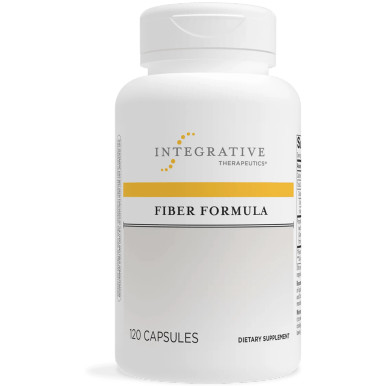
Fiber Formula by Integrative Therapeutics is a capsule option — worth mentioning specifically for anyone who has had trouble with powdered fiber drinks. Each 4-capsule serving contains a proprietary blend of psyllium husk, oat bran, guar gum, marshmallow root extract, and citrus pectin. The label recommends taking with at least 8 oz of water. Capsules can be easier to manage than powders for people who find the gel texture unpleasant.
Fiber Formula 120c
$14.75
Fiber Formula 120c by Integrative Therapeutics Integrative Therapeutics' Fiber Formula is a dietary supplement that helps to promote optimal colon health. It is formulated with… Click here to read more
Precautions
Psyllium is broadly safe and well-tolerated for most adults. That said, a few situations call for more care:
- Swallowing difficulties: If you have any history of trouble swallowing, esophageal narrowing, or throat conditions, talk to a doctor before using psyllium in powder form. The risk of choking or obstruction is real in these cases.
- Signs of bowel obstruction: If you haven't had a bowel movement in several days and are experiencing significant abdominal pain or vomiting, do not take psyllium — see a doctor first.
- Medications: Psyllium can reduce the absorption of certain drugs, including some used to support blood sugar and heart function, as well as certain antidepressants. Separate psyllium doses from medications by at least one to two hours and let your prescriber know you're adding a fiber supplement.
- Allergies: True psyllium allergy is rare but documented, particularly among people with occupational exposure. If you notice hives, wheezing, or facial swelling after taking it, discontinue use and seek care.
- Fluid-restricted conditions: If you're on a fluid restriction due to kidney disease or other conditions, talk to your healthcare provider before using psyllium, since adequate hydration is essential for safe use.
As with any supplement, speak with your healthcare provider before starting psyllium — especially if you're taking prescription medications, managing a digestive condition, are pregnant, or are nursing.
The Bottom Line
So, is psyllium husk a bulk-forming laxative? Yes — and that label describes one of the most studied, best-tolerated fiber sources available. It works by changing the physical properties of stool, not by stimulating or overriding your digestive system, which is why it carries no dependence risk and is appropriate for ongoing daily use in most healthy adults. The two things that matter most: use enough liquid every time, and give it a few weeks to work. If you do those two things consistently, it tends to deliver.
Not Sure Where Psyllium Fits for You?
Fiber is helpful, and knowing the answer to "is psyllium husk a bulk-forming laxative?" is a good start — but digestive health is rarely a one-ingredient problem. If you've been dealing with irregular bowel habits, bloating, or persistent discomfort and aren't sure whether psyllium is the right starting point — or how it fits alongside other things you're taking — a conversation with a knowledgeable practitioner is worth more than another round of searching.
Holistic Health Partners offers free product consultations with Carolyn Mulally BS, RN, HN-BC, a board-certified holistic nurse with deep experience in gut health and supplement guidance. There's no pressure, no hard sell — just a genuine conversation about what your body actually needs. Visit Covenant Health Products to learn more and book a time.
These statements have not been evaluated by the Food and Drug Administration. This product is not intended to diagnose, treat, cure, or prevent any disease.