4Sight Ortho Molecular: Ingredients, Dosage & Safety
Table of Contents
- What is 4Sight Ortho Molecular?
- What's in 4Sight Ortho Molecular, and how does each ingredient work?
- Who is 4Sight a good fit for?
- How does 4Sight Ortho Molecular compare to OcuView and AREDS2?
- How should you take 4Sight?
- What won't 4Sight do?
- Is 4Sight safe, and what are the side effects?
- Is 4Sight Ortho Molecular worth it?
- FAQs
Michelah Bisset has run a quilt shop in Decorah, Iowa, for nineteen years, and she hand-binds every quilt that leaves it. At 56 she threads her needles under the daylight lamp by the register now, holding the needle at arm's length until the thread finds the eye. Last month she cut a border five inches short because she read a 42 on the pattern as a 47. That same week, her sister texted her a link to something called 4Sight Ortho Molecular with two words: "for your eyes."
Michelah hadn't opened it. Her optometrist had already told her the backs of her eyes looked healthy and that she needed stronger readers, and she couldn't see what a capsule would do that a new pair of glasses wouldn't.
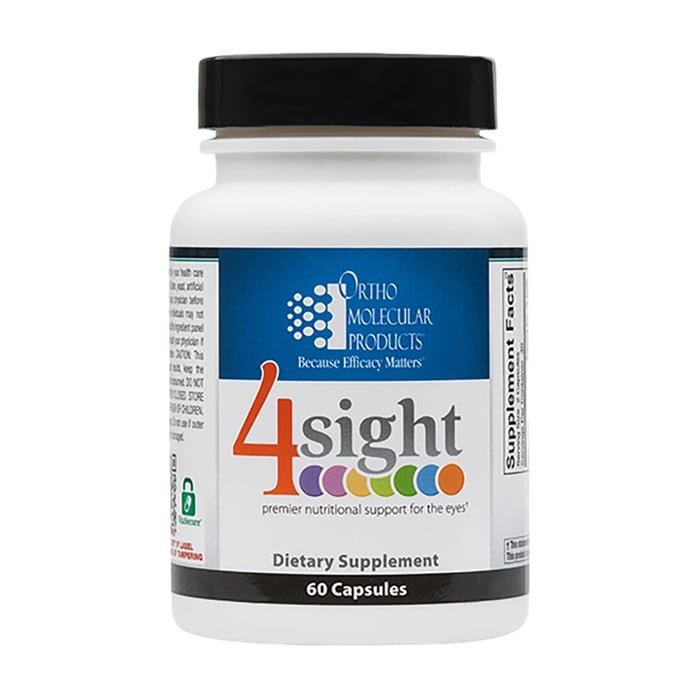
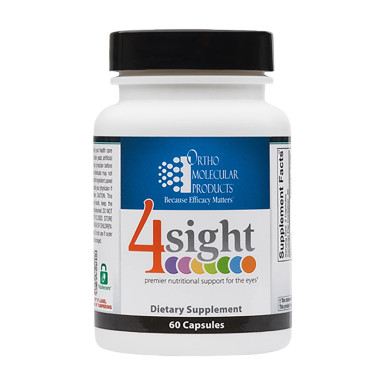
4Sight Ortho Molecular is a practitioner-grade eye supplement. Each 2-capsule serving combines 30 mg lutein, 1.5 mg zeaxanthin and 6 mg lycopene with 150 mg bilberry fruit extract, 60 mg ginkgo leaf extract, 400 mg taurine, 200 mg N-acetyl-L-cysteine, 150 mg alpha lipoic acid, 100 mg quercetin and 15 mg chelated zinc. Ortho Molecular formulates it to provide antioxidant support for the eyes, support macular health and increase ocular circulation in adults who want to maintain eye health as they age. The label dose is 2 capsules per day, so a 60-count bottle lasts 30 days and a 120-count bottle lasts 60. The label also says not to take it if you are pregnant or nursing.
What is 4Sight Ortho Molecular?
Ortho Molecular starts from one premise: the eye is the organ most exposed to oxidative damage. Light, cigarette smoke, the oxygen in the air and simple abrasion all contribute. According to the company, when ultraviolet and blue light pass through to the photoreceptors (the rods and cones) and the pigmented epithelial cells behind them, they generate reactive oxygen species. If there aren't enough antioxidants on hand to neutralize them, the tissue takes the damage.
4Sight is the company's answer to that problem, built from what it calls "a specific blend of botanicals, nutrients, antioxidants and minerals." The design choice that matters most is what it leaves out. Most drugstore eye vitamins are built around vitamins C and E plus lutein and zeaxanthin. 4Sight contains no vitamin C and no vitamin E at all. It leans instead on plant extracts, amino acids and a much larger lutein dose. That makes it a different kind of product, not a stronger version of the familiar one, and it's the first thing to understand before buying it.
Ortho Molecular sells only through licensed health care practitioners, which is why Covenant Health Products requires free clinic registration before purchase. The zinc is Albion bisglycinate chelate, a form bound to the amino acid glycine. The capsules are vegetable-based, and the formula contains no gluten, yeast, or artificial colors or flavors.
4Sight
$87.60
4Sight – Advanced Eye Health 4Sight by Ortho Molecular Products is a comprehensive eye health supplement scientifically formulated to support vision, ocular circulation, and macular… Click here to read more
What's in 4Sight Ortho Molecular, and how does each ingredient work?
Ten actives is a lot for one capsule pair. Here is what each one is there to do, according to Ortho Molecular, along with the places where the evidence is thinner than the label implies.
Lutein (30 mg), zeaxanthin (1.5 mg) and lycopene (6 mg)
Lutein and zeaxanthin are yellow carotenoid pigments, and Ortho Molecular calls their role in eye health "well-established from epidemiological, clinical and interventional studies." Population research links higher levels of the two in eye tissue with better eye function and visual acuity. In lens cells exposed to hydrogen peroxide, supplementation protected lens protein, lipid and DNA from oxidative damage.
The strongest human evidence the company cites is a 12-month trial of 145 people. The two supplemented groups saw significant improvements in plasma antioxidant capacity, circulating macular xanthophyll levels and the optical density of the macular pigment. One detail almost every retailer drops: those capsules also contained DHA and EPA, the omega-3s from fish oil. 4Sight has none. People who already take a fish oil such as Orthomega 820 are closer to that study's setup, but the trial still didn't test 4Sight itself.
The 30 mg lutein dose is three times the 10 mg in the National Eye Institute's AREDS2 formula. That doesn't make it three times as effective, and no study tells us either way. Zeaxanthin runs the other direction, at 1.5 mg against AREDS2's 2 mg. Ortho Molecular groups lycopene, the red carotenoid in tomatoes, with the other two but describes no separate role for it, so treat it as part of the antioxidant blend.
Bilberry fruit extract (150 mg)
Bilberry, a European cousin of the blueberry, is concentrated here for its anthocyanosides, the purple pigments that act as antioxidants. Ortho Molecular credits it with two specific actions: inhibiting aldose reductase, an enzyme that converts glucose to sorbitol inside tissue, and improving capillary permeability. In a cell study, bilberry extract supported renewal of corneal cells. The 150 mg dose sits just under the 160 mg per day that the NIH's National Center for Complementary and Integrative Health says has been used safely in research for up to six months. Bilberry's reputation for night vision is a different story, covered further down.
Ginkgo biloba leaf extract (60 mg)
Ginkgo is the circulation piece of the formula and the main reason Ortho Molecular lists "increases ocular circulation" as a clinical application. The company describes the extract as increasing cerebral blood flow, scavenging reactive oxygen and nitrogen species, and supporting mitochondrial function. Animal studies on the retina are the basis for its antioxidant role in the eye.
One mechanism on that list matters for safety. Ginkgo antagonizes platelet-activating factor, a signal that helps platelets clump. That is part of how it supports blood flow, and it's also why anyone on a blood thinner needs to read the safety section below before starting.
Alpha lipoic acid (150 mg)
Alpha lipoic acid dissolves in both water and fat, so it works inside cells and in cell membranes. Ortho Molecular points to the same aldose reductase effect as bilberry: blocking the enzyme prevents sorbitol from building up and pulling other antioxidants out of eye tissue. Lipoic acid also "recharges" spent vitamin C, vitamin E and glutathione so they can neutralize free radicals again. In rat studies it reached high concentrations in the lens. Because 4Sight contains no vitamin C or E of its own, that recharging works on whatever your diet and other supplements supply.
Taurine (400 mg) and N-acetyl-L-cysteine (200 mg)
Taurine is the largest single ingredient by weight, and the retina holds an unusually high concentration of it. Ortho Molecular states it is required for retinal tissue growth and has been shown to protect the outer segments of the rod cells, the part that captures light, from oxidative damage. Researchers have also proposed roles in protecting photoreceptors and regulating calcium movement in the retina.
N-acetyl-L-cysteine (NAC) is on the label at 200 mg, but Ortho Molecular's product page doesn't describe why. Its basic job in the body is supplying cysteine, the amino acid the body needs to make glutathione. That fits alongside alpha lipoic acid, which recycles glutathione once it's been used.
Zinc (15 mg)
Zinc is a working part of superoxide dismutase, one of the body's own antioxidant enzymes. Ortho Molecular's more specific point concerns lipofuscin, a fatty residue from normal wear that builds up in the retina's pigment layer. The enzymes that digest old rod outer segments and keep lipofuscin from accumulating are significantly less active in older people, and in laboratory studies zinc stimulated them. At 15 mg, 4Sight supplies 136% of the Daily Value, well below the 80 mg in AREDS2.
Quercetin (100 mg)
Quercetin is a flavonoid found in onions, apples and many other plants, and Ortho Molecular says it "provides key antioxidant support for eyes." In fairness to readers, the three references the company cites for that line study skin cells and the gut lining, not eyes. Quercetin is a well-characterized antioxidant, but its eye-specific case here is the weakest in the formula.
Who is 4Sight a good fit for?
4Sight suits a fairly specific person. These are the situations where it makes the most sense:
- An adult in their 50s or 60s whose eye doctor has said things look healthy, and who wants daily antioxidant support aimed at the macula rather than another general multivitamin.
- Someone already covering vitamins C and E through a multivitamin or diet. Because 4Sight leaves those out, it pairs logically with a broad multi instead of duplicating it.
- People looking for a higher lutein intake than standard eye formulas provide: 30 mg per serving, three times the 10 mg in AREDS2.
- Anyone whose practitioner has specifically recommended a botanical-and-amino-acid eye formula over a vitamin-based one.
- Those avoiding gluten, yeast and artificial colors or flavors.
Who should not take 4Sight?
- Anyone pregnant or nursing. The label is explicit: "Do not consume this product if you are pregnant or nursing." This is not a "check with your doctor first" situation.
- People taking anticoagulants such as warfarin, unless their prescriber approves it. Ginkgo may increase bleeding risk in people on these drugs.
- People taking medication to lower blood sugar, unless their prescriber approves it. Ortho Molecular's own product sheet discusses alpha lipoic acid's effect on insulin sensitivity, so the combination is worth a conversation before you start.
- Anyone whose eye doctor has diagnosed macular degeneration and recommended an AREDS2 formula. 4Sight is not that formula and shouldn't be substituted for it.
How does 4Sight Ortho Molecular compare to OcuView and AREDS2?
Ortho Molecular makes a second eye formula, OcuView, and the two are easy to confuse. The clearest way to see the difference is next to the AREDS2 formula published by the National Eye Institute, the most studied eye supplement recipe there is.
| Per daily dose | 4Sight | OcuView | AREDS2 formula (NEI) |
|---|---|---|---|
| Lutein | 30 mg | 10 mg | 10 mg |
| Zeaxanthin | 1.5 mg | 2 mg | 2 mg |
| Vitamin C | None | 500 mg | 500 mg |
| Vitamin E | None | 400 IU | 400 IU |
| Zinc | 15 mg | 25 mg | 80 mg (plus copper) |
| Alpha lipoic acid | 150 mg | 100 mg | None |
| Bilberry, ginkgo, taurine, NAC, quercetin, lycopene | All included | Not in listed formula | None |
| Outcome research on the formula itself | Ingredient-level studies | Ingredient-level studies; doses mirror AREDS2 | Large NEI clinical trials |
| Best fit | Healthy eyes, broad antioxidant and circulation support | Someone who wants AREDS2-style doses plus ALA | Intermediate AMD, on an eye doctor's advice |
OcuView wins on one dimension that matters to a lot of people: its core doses track AREDS2, the only recipe here backed by large outcome trials. According to the NEI, AREDS and AREDS2 supplements reduce the risk of progression from intermediate to advanced age-related macular degeneration by about 25 percent. The same page notes that AREDS2 excluded people without AMD or with early AMD, because the original study showed no benefit for them. Neither 4Sight nor OcuView has been tested as a finished product in a trial like that.
Where 4Sight Ortho Molecular stands apart is breadth. Bilberry, ginkgo, taurine, NAC and quercetin aren't in either of the other two, and it carries three times the lutein. Someone with healthy eyes who wants antioxidant and circulation support beyond the vitamin approach gets something distinct here. Someone with an AMD diagnosis should follow their eye doctor's recommendation, which usually means AREDS2. Our aim is to help you buy the right supplement, not more of them.
If you're not sure which of these fits your situation, Holistic Health Partners offers a free product consultation.
How should you take 4Sight?
The 4Sight Ortho Molecular label calls for 2 capsules per day, or as recommended by your health care professional. That's the whole label instruction. A 60-count bottle covers 30 days and a 120-count covers 60.
The label doesn't specify timing or food. Lutein, zeaxanthin and lycopene are fat-soluble, and fat-soluble nutrients absorb better alongside food that contains some fat, so taking both capsules with a meal is a sensible default. Choose a meal you eat every day so the habit sticks.
Set expectations accordingly: this isn't a supplement you'll feel working. Macular pigment changes slowly, and the 145-person study Ortho Molecular cites ran for a full 12 months before measuring results. Judge it by consistent use over many months and by what your eye doctor sees at your regular exams, not by how your eyes feel after a week.
What won't 4Sight do?
It won't change your glasses prescription. Needing to hold a menu or a needle farther away as you get older comes from the eye's lens stiffening with age. Reading glasses are the fix for that, and no eye supplement replaces them.
It isn't a night-vision supplement, whatever bilberry's reputation says. The story goes back to World War II, when British pilots supposedly ate bilberry jam before night missions. According to the NCCIH, studies on bilberry and night vision have had conflicting results, much of the research was poor quality, and "the most rigorous studies have not found bilberry to be effective in improving night vision in healthy people." If night driving has become harder, book an eye exam rather than buying a supplement.
It isn't an AREDS2 substitute. If you've been diagnosed with macular degeneration, the formula with outcome data is AREDS2, and the decision belongs with your eye doctor.
It isn't a multivitamin. With no vitamin C, vitamin E, B vitamins or vitamin D, 4Sight doesn't fill general nutritional gaps. If you want that covered too, a broad formula such as Alpha Base without Iron does a different job.
It probably isn't worth it if you already eat well and take an AREDS2-style formula. Layering 4Sight on top adds more lutein, more zinc and a second set of antioxidants, and nobody has studied what that stack does.
4Sight
$87.60
4Sight – Advanced Eye Health 4Sight by Ortho Molecular Products is a comprehensive eye health supplement scientifically formulated to support vision, ocular circulation, and macular… Click here to read more
Is 4Sight safe, and what are the side effects?
Pregnancy and nursing: The 4Sight Ortho Molecular label caution reads, "Do not consume this product if you are pregnant or nursing. Consult your physician for further information." Separately, the NCCIH notes that ginkgo may be unsafe during pregnancy.
Blood thinners: Ginkgo may increase the risk of bleeding in people taking anticoagulant drugs such as warfarin, and it may interact with other medications. If you take any prescription, check with the prescriber before starting 4Sight.
Blood sugar medication: Alpha lipoic acid affects insulin sensitivity, which Ortho Molecular's own literature describes. If you manage blood sugar with medication, involve your prescriber first.
Common side effects: Ginkgo leaf extract is generally well tolerated. The NCCIH lists dizziness, digestive upset and headache as the most common side effects. Bilberry extract has been used safely in research at up to 160 mg per day for up to six months; 4Sight provides 150 mg.
Zinc from all sources: 4Sight's 15 mg is modest, but zinc adds up across a multivitamin, a lozenge and an eye formula. The NIH Office of Dietary Supplements sets the adult upper limit at 40 mg a day and notes that too much zinc over time can lower copper levels. Total your daily intake if you take more than one zinc-containing product.
As with any supplement, consult your healthcare provider before use, especially if you are pregnant, nursing, or taking medications.
Is 4Sight Ortho Molecular worth it?
For an adult with healthy eyes who wants targeted antioxidant support and already covers vitamins C and E elsewhere, 4Sight Ortho Molecular is a well-built, practitioner-grade option with a generous lutein dose and ingredients most eye formulas skip. For someone with a macular degeneration diagnosis, someone pregnant or nursing, or someone hoping to improve night vision or skip reading glasses, it's the wrong product. The honest trade-off: you get breadth and a high lutein dose, but not the AREDS2 vitamins or a clinical trial on the finished formula. If you'd rather compare it with another practitioner brand's approach, our look at Macular Support Formula by Pure Encapsulations covers a vitamin-based alternative.
Michelah ordered the stronger readers first, which was the right call, and she's bringing her sister's link to her next eye exam.
Not sure if this is the right product for you?
The licensed wellness professionals at Holistic Health Partners, led by Carolyn Mulally BS, RN, HN-BC, offer free product consultations — no appointment required. They can help you find the right supplement for your specific health goals.
Get a Free Consultation
These statements have not been evaluated by the Food and Drug Administration. This product is not intended to diagnose, treat, cure, or prevent any disease.