OcuView Ortho Molecular: Ingredients, Dosage & Safety
Table of Contents
- What is OcuView Ortho Molecular?
- What's in OcuView Ortho Molecular, and how does each ingredient work?
- Who should consider OcuView?
- How does OcuView Ortho Molecular compare to an AREDS2 formula?
- How much OcuView should I take, and when?
- What won't OcuView do?
- Is OcuView Ortho Molecular safe? What are the side effects and interactions?
- Is OcuView Ortho Molecular worth it?
- FAQs
The card has been riding on the dash of Austin Pruitt's truck for three weeks, tucked under a tide chart and a gas receipt. On the back, in his optometrist's blue ink, it says OcuView Ortho Molecular. Austin is 57 and has run walleye charters on Lake Erie for twenty-two seasons. He can read the water temperature off the color of the chop before the gauge catches up.
At his last exam the optometrist lingered over the retinal scans, then asked two questions. How many days a year was he out on open water, squinting into the glare? Around two hundred. Did he ever eat anything green? Not really. She didn't sound alarmed. She just wrote on the card and slid it across the counter.
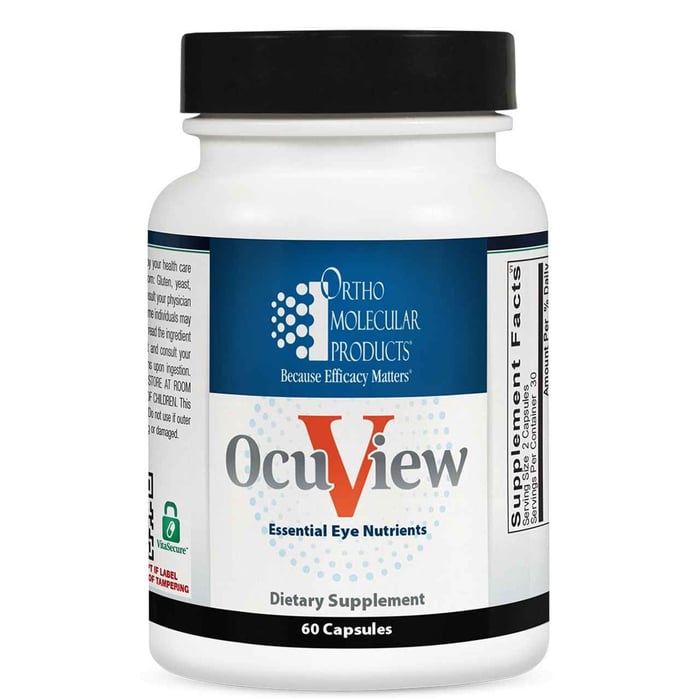
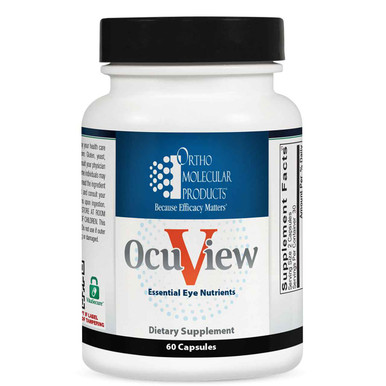
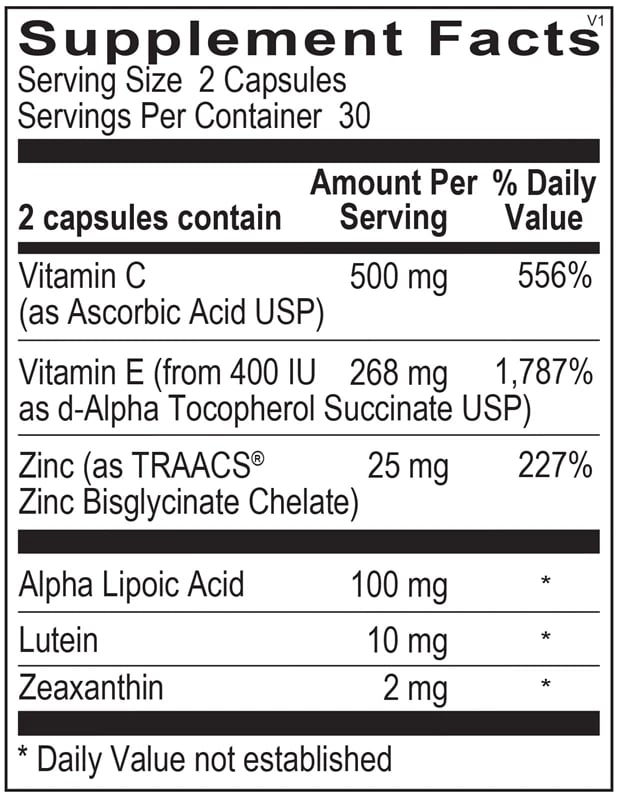
OcuView by Ortho Molecular Products is a practitioner-grade eye supplement that pairs the two macular carotenoids, lutein (10 mg) and zeaxanthin (2 mg), with vitamin C (500 mg), vitamin E (400 IU), zinc as bisglycinate chelate (25 mg), and alpha lipoic acid (100 mg). Ortho Molecular formulates it to provide antioxidant support for the eyes, support macular health, and help protect the macula against light. The dose is two capsules per day, so one 60-capsule bottle lasts 30 days. It suits adults who want one formula for long-term eye support, especially people who rarely eat leafy greens or who spend long hours in bright light. It is not an AREDS2 formula, and it does not replace an eye exam. OcuView Ortho Molecular is sold through healthcare practitioners rather than retail stores, which is why you won't find it on a pharmacy shelf.
What is OcuView Ortho Molecular?
OcuView is a six-ingredient capsule built around a simple idea: the macula, the small central patch of retina responsible for sharp detail vision, sits under a constant stream of light and oxygen, and it relies on two kinds of nutritional defense. The first is pigment. Lutein and zeaxanthin collect there and filter incoming light. The second is the antioxidant network that cleans up the reactive molecules that light exposure produces. OcuView supplies both in one bottle.
Ortho Molecular sells only through licensed healthcare practitioners. At Covenant Health Products, that means purchase goes through free clinic registration rather than a straight add-to-cart. The trade-off for that extra step is a fully disclosed label. Every ingredient has a stated amount, with no proprietary blend hiding the doses.
The forms are where a practitioner line usually separates itself from a drugstore eye vitamin, and OcuView is a good example. Look at the vitamin E line on the label: "268 mg (from 400 IU as d-Alpha Tocopherol Succinate)." People often read that as a typo. It isn't. The NIH Office of Dietary Supplements converts natural-source vitamin E at 0.67 mg per IU, so 400 IU of the natural d-form comes out to exactly 268 mg. The synthetic dl-form converts at 0.9 mg per IU, which means a cheaper product would need about 360 mg of synthetic vitamin E to reach the same 400 IU. Same number on the front of the bottle, different molecule inside it.
The zinc is TRAACS zinc bisglycinate chelate, a mineral bound to two glycine molecules, rather than the zinc oxide used in many mass-market formulas. And the lutein-to-zeaxanthin ratio of 10 mg to 2 mg matches the ratio the National Eye Institute chose for its AREDS2 research formula.
OcuView - 60 CT
$36.50
OcuView by Ortho Molecular Products – Macular and Antioxidant Support OcuView by Ortho Molecular Products is an eye health supplement in capsule form that provides… Click here to read more
What's in OcuView Ortho Molecular, and how does each ingredient work?
Two capsules of OcuView Ortho Molecular provide the six actives below. The other ingredients are a vegetable capsule, microcrystalline cellulose, ascorbyl palmitate, and magnesium stearate. The formula contains no gluten, yeast, artificial colors, or artificial flavors.
Lutein (10 mg) and zeaxanthin (2 mg)
These are the only two dietary carotenoids that concentrate in the macula, where they give the tissue its faint yellow color. That color matters. Yellow pigment absorbs blue, short-wavelength light, so lutein and zeaxanthin act as an internal filter sitting in front of the photoreceptors. This is the mechanism behind Ortho Molecular's claim that OcuView helps protect the macula against light. The same molecules also neutralize reactive oxygen species in the surrounding tissue, which the manufacturer describes as supporting redox status in cells under oxidative stress.
Your body cannot make either one. They come from food or not at all. For scale, 10 mg of lutein is roughly what you'd get from half a cup of cooked spinach. Plenty of people never come close on a normal day.
Ortho Molecular points to a year-long trial of 145 people in which lutein and zeaxanthin supplementation raised antioxidant capacity and macular pigment optical density, the standard measurement of how much pigment is sitting in the macula. One honest footnote: the capsules in that trial also contained the omega-3s DHA and EPA, which OcuView does not. If that pairing interests you, it means adding a fish oil such as Orthomega 820 alongside it.
Vitamin C (500 mg as ascorbic acid)
Vitamin C works in watery environments. The fluid inside the front of the eye carries vitamin C at concentrations many times higher than blood does, which tells you the eye actively pulls it in. Ortho Molecular cites research suggesting vitamin C, in combination with other nutrients, supports visual acuity and the health of the eye's blood vessels. It also does a second job here: after vitamin E neutralizes a free radical, vitamin C helps restore it so it can work again.
Vitamin E (400 IU / 268 mg as d-alpha tocopherol succinate)
Vitamin E is fat-soluble, so it works where vitamin C can't: inside cell membranes. That location is the point. Photoreceptor membranes are packed with polyunsaturated fats, which oxidize easily, and once one fat molecule oxidizes it can set off a chain reaction through its neighbors. Vitamin E breaks that chain. The succinate form is a dry, stable version of natural vitamin E, which is why it turns up in capsules rather than softgels.
Zinc (25 mg as zinc bisglycinate chelate)
The retina and the layer beneath it hold some of the highest zinc concentrations in the body. Zinc is a structural part of copper-zinc superoxide dismutase, one of the cell's front-line antioxidant enzymes. Ortho Molecular also notes that zinc stimulates the enzymes that break down the worn-out tips of rod cells, which the retina sheds every day, helping prevent a buildup of lipofuscin, the "wear and tear" residue that accumulates with age. Those enzymes are less active in older adults.
Form matters more with zinc than with most minerals. A single-dose crossover study in 12 healthy women found zinc bisglycinate was absorbed significantly better than zinc gluconate, and some studies of zinc oxide have found individual people absorbing very little of it at all.
Alpha lipoic acid (100 mg)
Alpha lipoic acid is unusual because it dissolves in both water and fat, so it can operate on both sides of a cell membrane. Ortho Molecular highlights its ability to "recharge" other antioxidants, including vitamins C and E and glutathione. Animal studies cited by the manufacturer show it can reach high concentrations in the lens and help maintain its health; that research is in animals, and it should be read that way. At 100 mg, alpha lipoic acid is a supporting player in OcuView, not the headline. Many standalone alpha lipoic acid studies use 600 mg.
Who should consider OcuView?
- Adults who eat spinach, kale, and egg yolks rarely, if ever, and want a measured daily amount of lutein and zeaxanthin instead of hoping their diet covers it.
- People who spend long hours in strong sunlight, such as boaters, golfers, landscapers, and lifeguards. Their macular pigment is doing a lot of filtering every day.
- Anyone already working with a practitioner on long-term eye support who would rather take one bottle than four separate ones.
- Someone whose eye doctor suggested "a lutein supplement with antioxidants" in general terms, without naming a specific formula.
Who should not take OcuView?
- If you are pregnant or nursing, consult your physician before taking this product. That is the manufacturer's label warning, word for word.
- If your eye doctor has told you to take a specific AREDS2 formula, do not swap in OcuView without asking first. The two formulas are close but not identical (see the comparison below).
- If you take warfarin or another blood thinner, or an antiplatelet medication, talk to your prescriber before starting. The vitamin E dose is the reason.
- If you take medication to manage blood sugar, check with your prescriber first because of the alpha lipoic acid.
- If your multivitamin already contains a significant amount of zinc, add up the total before doubling up.
If you're not sure whether this fits your situation, Holistic Health Partners offers a free product consultation.
How does OcuView Ortho Molecular compare to an AREDS2 formula?
This is the comparison most people actually need, because "AREDS2" is the name eye doctors tend to say out loud. AREDS2 refers to a specific nutrient combination studied by the National Eye Institute, and many brands sell versions of it. A standalone lutein softgel is the other common option on store shelves. Here is how OcuView Ortho Molecular lines up against both.
| Per daily dose | OcuView | AREDS2-style formula | Standalone lutein softgel |
|---|---|---|---|
| Lutein / zeaxanthin | 10 mg / 2 mg | 10 mg / 2 mg | Usually 10 to 20 mg / 0 to 4 mg |
| Vitamin C | 500 mg | 500 mg | None |
| Vitamin E | 400 IU, natural form | 400 IU, form varies by brand | None |
| Zinc | 25 mg, bisglycinate chelate | 80 mg in the standard formula, often zinc oxide | None |
| Copper | None | 2 mg | None |
| Alpha lipoic acid | 100 mg | None | None |
| Where it wins | Better-absorbed zinc at a moderate dose, natural vitamin E, an extra antioxidant | It is the studied combination. If your eye doctor named it, this is the one to buy. | Cheapest and simplest. Reasonable if you already take a solid multivitamin. |
Two differences deserve a plain explanation. First, copper. The AREDS researchers added 2 mg of copper because the original formula's 80 mg of zinc can interfere with copper absorption over time. OcuView skips copper and keeps zinc at 25 mg. According to the NIH Office of Dietary Supplements zinc fact sheet, the copper problem shows up at doses of 50 mg or more taken over weeks, so 25 mg on its own sits well under that line. It becomes a real question only if you stack OcuView on top of other zinc sources.
Second, the AREDS2 name means something specific. If an eye doctor has recommended AREDS2 for you by name, follow that recommendation. OcuView overlaps with it heavily, but it is not the same formula, and we won't pretend otherwise. We've also written about Pure Encapsulations Macular Support Formula, another practitioner-grade option, if you'd like a second point of comparison.
How much OcuView should I take, and when?
The label dose for OcuView Ortho Molecular is 2 capsules per day, or as recommended by your health care professional. One bottle holds 30 servings.
The label doesn't specify timing or food, so here is the reasoning we'd use. Lutein, zeaxanthin, and vitamin E are all fat-soluble, which means they absorb better when there is some fat in the same meal. Eggs, avocado, olive oil, nuts, or a piece of fish all count. Zinc taken on an empty stomach also upsets some people's stomachs. Both points lead to the same practical answer: take OcuView with a meal. Both capsules at breakfast works. So does one with lunch and one with dinner. Either way you land on the labeled daily amount.
Set your expectations on months, not weeks. Macular pigment builds slowly. In one controlled study, people taking a combined 12 mg of lutein and zeaxanthin daily, the same combined amount OcuView provides, showed a measurable rise in macular pigment after four to six months of supplementation. And you probably won't feel it happening. The honest way to evaluate OcuView is a macular pigment measurement, which some optometrists offer, taken before you start and again after four to six months.
What won't OcuView do?
Every eye supplement website lists benefits. Here is the other list.
It won't change your glasses prescription. If small print has gotten blurry, that is usually a lens issue, and an updated prescription is the fix.
It won't stand in for an eye exam. Sudden changes in vision, straight lines that start to look wavy, or a new dark or blank spot in the center of your vision are reasons to call your eye doctor that day, not reasons to start a supplement.
It won't do much for dry, gritty, or tired eyes. That's not what this formula is built for, and your eye doctor is the better first conversation.
And it may be redundant for you. If you eat a cup of cooked greens most days and already take a good multivitamin, you might be getting close to these amounts from food and your multi. Keep eating the spinach. It's cheaper.
OcuView - 60 CT
$36.50
OcuView by Ortho Molecular Products – Macular and Antioxidant Support OcuView by Ortho Molecular Products is an eye health supplement in capsule form that provides… Click here to read more
Is OcuView Ortho Molecular safe? What are the side effects and interactions?
The manufacturer's label carries one warning: If you are pregnant or nursing, consult your physician before taking this product.
Beyond the label, three ingredients carry interaction considerations worth knowing about.
Vitamin E and blood thinners. The NIH Office of Dietary Supplements notes that large doses of vitamin E taken with anticoagulant or antiplatelet medications such as warfarin can increase bleeding risk, and that the amount needed for a clinically significant effect probably exceeds 400 IU a day. OcuView provides exactly 400 IU. That sits right at the edge, which is why anyone on these medications should clear it with their prescriber first, and should mention it before any surgery or dental procedure.
Total zinc. The adult upper limit for zinc from all sources is 40 mg a day. OcuView provides 25 mg. Many multivitamins add another 15 to 25 mg, which can push the total past 40. If you take a multi such as Alpha Base Without Iron, check its zinc line and add the numbers before taking both.
Alpha lipoic acid and blood sugar medication. Alpha lipoic acid has been studied for its effects on glucose metabolism. The 100 mg in OcuView is modest, but if you take medication to manage blood sugar, tell your prescriber before adding it.
Zinc can cause nausea on an empty stomach in some people; taking OcuView with food usually solves that. Anyone with a known sensitivity should review the other ingredients: vegetable capsule, microcrystalline cellulose, ascorbyl palmitate, and magnesium stearate.
As with any supplement, consult your healthcare provider before use, especially if you are pregnant, nursing, or taking medications.
Is OcuView Ortho Molecular worth it?
For the right person, yes. OcuView makes the most sense for an adult who eats few leafy greens, spends a lot of time in bright light, and wants one well-made capsule covering the main macular nutrients at doses that are actually listed on the label. The chelated zinc and natural-form vitamin E are real upgrades over many retail eye formulas.
It makes less sense if your eye doctor has named AREDS2 specifically, if you already eat greens daily and take a good multi, or if you're on blood thinners and haven't talked to your prescriber yet. The trade-off to weigh is copper: OcuView leaves it out, which is reasonable at 25 mg of zinc but worth thinking about if you take zinc from other sources.
We don't want you to buy more supplements. We want you to buy the right ones. For Austin, the right next step is probably a phone call back to the optometrist to ask what she had in mind, with the card finally off the dash.
Not sure if this is the right product for you?
The licensed wellness professionals at Holistic Health Partners, led by Carolyn Mulally BS, RN, HN-BC, offer free product consultations — no appointment required. They can help you find the right supplement for your specific health goals.
Get a Free Consultation
These statements have not been evaluated by the Food and Drug Administration. This product is not intended to diagnose, treat, cure, or prevent any disease.